# A Decentralized FDA
On Wishonia, we eliminated disease 4,000 years ago. Every citizen has access to every treatment. Every outcome is recorded. Every disease gets studied. It’s not complicated. You let sick people try things and write down what happens. But since your planet somehow hasn’t figured this out, here’s the instruction manual.
Out of [2.4 billion people (95% CI: 2 billion people-2.8 billion people)](../../knowledge/appendix/parameters-and-calculations.llms.md#sec-current_disease_patients_global) with chronic disease, only [1.9 million](../../knowledge/appendix/parameters-and-calculations.llms.md#sec-current_trial_slots_available) participate in trials annually^([1](../references.llms.md#ref-global-trial-participant-capacity)). That’s **[0.06%](../../knowledge/appendix/parameters-and-calculations.llms.md#sec-current_clinical_trial_participation_rate)**.
[44.8% (95% CI: 40%-50%)](../../knowledge/appendix/parameters-and-calculations.llms.md#sec-patient_willingness_trial_participation_pct) would volunteer^([2](../references.llms.md#ref-patient-willingness-clinical-trials)) if they could. Only [0.06%](../../knowledge/appendix/parameters-and-calculations.llms.md#sec-current_clinical_trial_participation_rate) currently participate.
This isn’t because people don’t want to help find cures. It’s because your system was designed by someone who hates sick people. Trials cost [\$41,000 (95% CI: \$20,000-\$120,000)](../../knowledge/appendix/parameters-and-calculations.llms.md#sec-traditional_phase3_cost_per_patient), require traveling to major medical centers, and reject [86.1%](../../knowledge/appendix/parameters-and-calculations.llms.md#sec-antidepressant_trial_exclusion_rate) of actual patients^([3](../references.llms.md#ref-antidepressant-trial-exclusion-rates)). You built a hospital you can’t get into. Impressive, in a genocidal sort of way.
Meanwhile, the system that’s supposed to catch dangerous side effects misses 90-99% of them. Only 1-10% of adverse drug events are ever reported to the FDA^([4](../references.llms.md#ref-adverse-event-underreporting)). No denominator data. No effect sizes. No way to calculate how often a drug actually hurts people. The safety monitoring system is a suggestion box that nobody uses.
**You don’t have a recruitment problem. You have a capacity problem.**
## The Solution: Consumer Reports for Drugs
Your species calls this “revolutionary.” Everyone else calls it “medicine.” You type in what’s wrong with you, see what worked for everyone else, and try it. The outcomes get recorded automatically. You have all the technology to build it right now, and somehow haven’t.
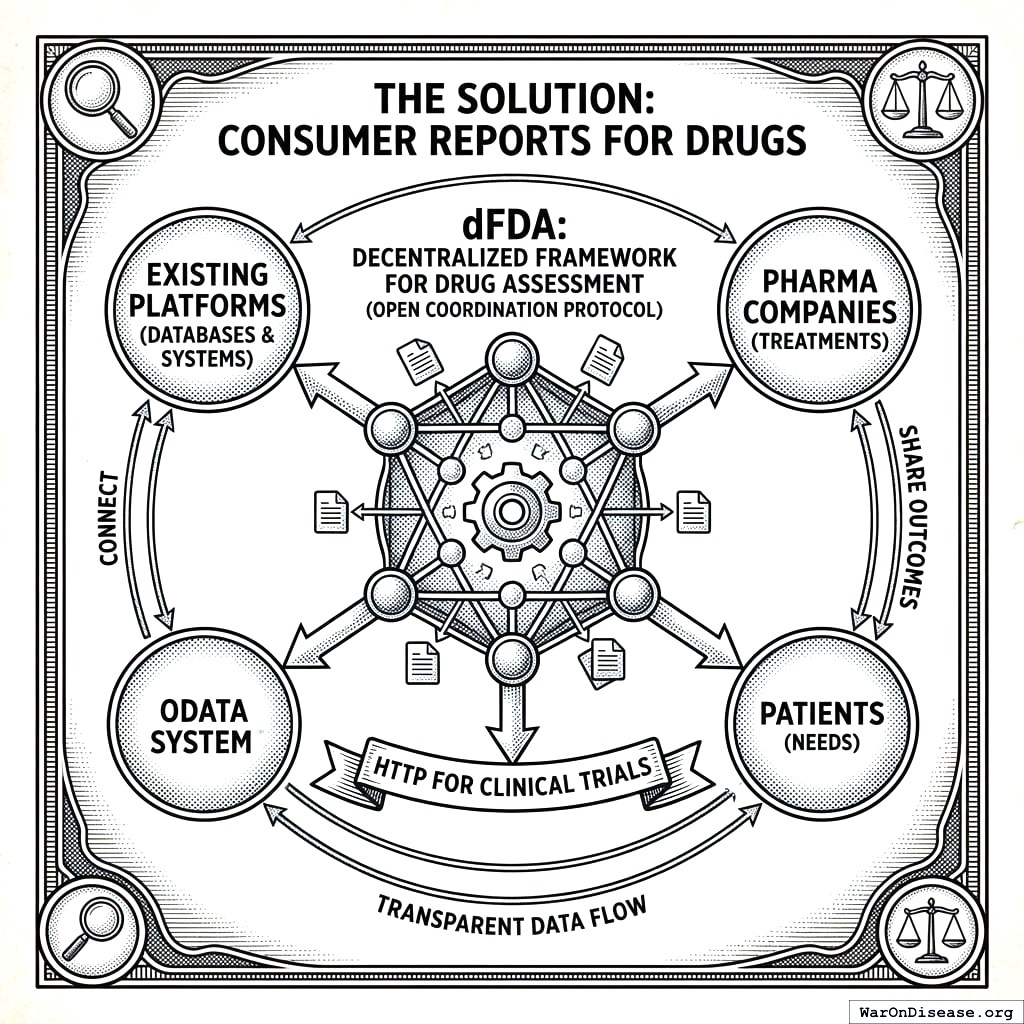
Your decentralized FDA will be an **open coordination protocol**. It will connect companies with treatments to patients who need them. It will be HTTP for clinical trials. A standard that lets all the existing systems talk to each other and share outcomes. You invented the internet over three decades ago and somehow forgot to plug medicine into it.
[](../../assets/images/dfda/dfda-section-the-solution-consumer-reports-for-drugs-bw-academic.jpg)
The FDA, but run by software. All the same boxes, fewer humans to corrupt.
## How It Works: Just Let People Try Stuff (Carefully)
Yes, the FDA exists because patent medicine salesmen were literally poisoning people, and thalidomide gave “birth defect” a whole new meaning. Nobody’s arguing for no regulation. We’re arguing for regulation that doesn’t kill more people than it saves (a low bar your current system fails to clear).
Here’s a thought that apparently never occurred to anyone in Washington:
What if sick people could just… try treatments?
And then we could… write down what happens?
And then other sick people could… see what worked?
Your current system leaves 95% of rare diseases^([5](../references.llms.md#ref-95-pct-diseases-no-treatment)) with zero approved treatments. It bars over 85% of patients^([3](../references.llms.md#ref-antidepressant-trial-exclusion-rates),[6](../references.llms.md#ref-fda-trial-patient-exclusion-criteria)) from the trials that might save them. We’ve perfected a system where only the healthy and compliant test cures for the sick and desperate. It’s genius, in a suicidal sort of way.
Trials are designed to test drugs on people who don’t actually exist. To get into a study for an antidepressant, you can’t have any other pesky problems like anxiety or PTSD. You can’t have a history of drug or alcohol use. You can’t be on other medications. You have to be the *perfect* kind of sick. The result? Only about 14%^([3](../references.llms.md#ref-antidepressant-trial-exclusion-rates),[7](../references.llms.md#ref-pubmed-14628985)) of real-world patients with depression would actually qualify. The patients who will actually be taking the drug are too messy for their pristine, clean data.
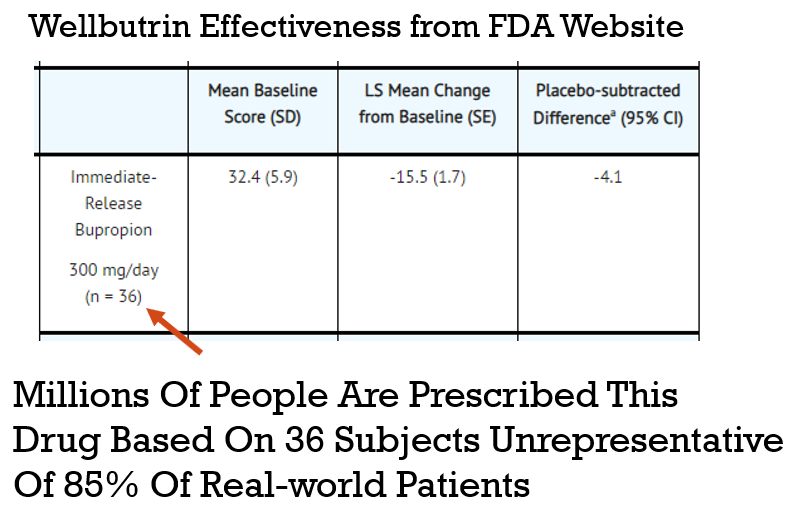
On top of excluding everyone with a pulse, these “definitive” studies run on comically small groups. They’ll test a new heart drug on 275 people^([8](../references.llms.md#ref-us-trial-enrollment-targets-2009)). A cancer drug on just 20 people^([8](../references.llms.md#ref-us-trial-enrollment-targets-2009)). A diabetes drug on 100 people^([8](../references.llms.md#ref-us-trial-enrollment-targets-2009)). Then they prescribe the winner to millions.
[](../../assets/images/wellbutrin-effectiveness-small-sample-size.png)
We tested this drug on thirty-six people and then gave it to millions. Like taste-testing with one person, then serving a stadium.
You’re basing survival on sample sizes smaller than kindergarten classes. So instead of studying mythical, perfectly sick unicorns, what if you just collected data from everyone who’s *actually* sick?
### The Power of Real-World Evidence (Or: Spying on Sick People for a Good Cause)
This framework is built on a slightly creepy idea: analyzing data from real patients in the real world. Real-World Evidence (RWE). A fancy term for “watching what happens.” (Your species needed a three-word acronym for this.)
Correlation isn’t causation.
But now there’s enough data and computing power to make each person their own control group. Track arthritis pain for a month. Take Turmeric, stop, start again. The pattern reveals whether it works or if it’s coincidence.
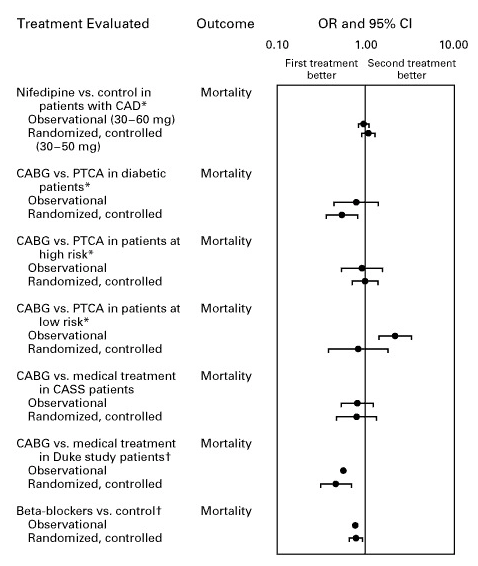
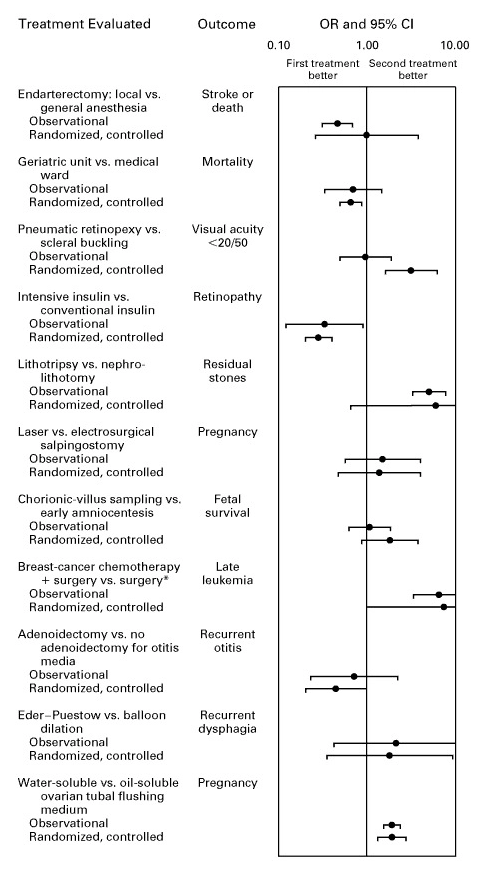
A meta-analysis in the New England Journal of Medicine^([9](../references.llms.md#ref-meta-analysis-in-the-new-england-journal-of-medicine)) quietly ended this argument while nobody was listening. Researchers compared observational studies against randomized controlled trials across 19 treatments. Cardiac surgery, cancer, ophthalmology, obstetrics. Result: nearly identical effect sizes. The cheap method and the expensive method found the same answers. You’ve been overpaying for data like tourists at an airport restaurant. There is a word for this. The word is “looking at what happened.” Your species calls it a “landmark meta-analysis.”
[](../../assets/images/observational-vs-randomized-effect-sizes.png)
Forest plot comparing effect sizes from observational studies vs. RCTs for cardiac treatments. The dots land in the same place. The expensive method and the cheap method found the same answers.
[](../../assets/images/observational-vs-randomized-trial-effect-sizes.png)
Forest plot comparing effect sizes from observational studies vs. RCTs across surgery, ophthalmology, and obstetrics. Nineteen comparisons. Nineteen agreements.
Each pair of dots represents the same treatment tested two ways: one observational (cheap, fast, real patients) and one randomized controlled (expensive, slow, cherry-picked patients). In nearly every comparison, the confidence intervals overlap. Both methods found the same treatments work and the same treatments don’t.
### The Two-Stage Pipeline: Watch First, Then Test
Observational data finds the signals. But correlation still isn’t proof (even you know that). So the framework uses two stages:
**Stage 1 (Signal Detection):** Aggregate data from millions of patients. Score each treatment-outcome relationship using six Bradford Hill causality criteria^([10](../references.llms.md#ref-bradford-hill-1965)): How strong is the effect? How consistent across people? Does the treatment come before the improvement? Is there a dose-response pattern? Cost: ~\$0.1 (95% CI: \$0.03-\$1) per patient.
**Stage 2 (Confirmation):** The top signals (the 0.1-1% most promising) proceed to pragmatic trials embedded in routine care. Simple randomization. Real patients. Real conditions. Cost: ~[\$929 (95% CI: \$97-\$3,000)](../../knowledge/appendix/parameters-and-calculations.llms.md#sec-dfda_pragmatic_trial_cost_per_patient) per patient. This eliminates confounding and proves causation.
Stage 1 filters millions of possibilities for almost nothing. Stage 2 confirms the winners for 1/44th the cost of traditional trials. The result: every treatment gets an evidence grade.
- **Validated**: Confirmed by pragmatic trial
- **Promising**: Strong observational signal, awaiting trial
- **Signal**: Hypothesis only, needs more data
The cheap stage does the hard work of searching. The expensive stage only runs on candidates that deserve it. Instead of spending \$57 million testing one drug, you spend pennies watching a million treatments and under a thousand dollars confirming the ones that work.
## Proof It Works (While the FDA Wasn’t Looking)
### The Oxford Recovery Trial: How the British Accidentally Saved Medicine
During COVID, while America was filling out forms, Oxford University did something crazy. They just tested drugs on dying people to see if they stopped dying.
Cost per patient:
- Normal clinical trials: [\$41,000 (95% CI: \$20,000-\$120,000)](../../knowledge/appendix/parameters-and-calculations.llms.md#sec-traditional_phase3_cost_per_patient)
- Oxford pragmatic trials: [\$500 (95% CI: \$400-\$2,500)](../../knowledge/appendix/parameters-and-calculations.llms.md#sec-recovery_trial_cost_per_patient)
That’s not a typo. Five hundred dollars. The cost of a nice dinner in Manhattan to save a human life.
Results:
- Found that steroids cut COVID deaths by 30%^([11](../references.llms.md#ref-recovery-trial-dexamethasone-results))
- Saved over [1 million](../../knowledge/appendix/parameters-and-calculations.llms.md#sec-recovery_trial_global_lives_saved) globally^([12](../references.llms.md#ref-recovery-trial-summary-quote))
- Took [3 months](../../knowledge/appendix/parameters-and-calculations.llms.md#sec-oxford_recovery_trial_duration_months)^([13](../references.llms.md#ref-recovery-trial-100-days-to-cure)) instead of 3 years
- Cost less than one Super Bowl commercial
The FDA’s response: “But did they file the correct paperwork?”
RECOVERY wasn’t a fluke. A Harvard meta-analysis of 108 embedded pragmatic trials^([14](../references.llms.md#ref-embedded-pragmatic-trials-meta-analysis)) found median costs of just \$97 per patient. The PCORnet ADAPTABLE trial enrolled 15,076 patients across 40 sites at [\$929 (95% CI: \$929-\$1,400)](../../knowledge/appendix/parameters-and-calculations.llms.md#sec-adaptable_trial_cost_per_patient) per patient^([15](../references.llms.md#ref-pragmatic-trials-cost-advantage)). 108 studies and counting. On most planets I’ve worked with, the pragmatic trial is the moment everyone looks at each other and says “wait, that’s it?” Yes. That’s it. Let sick people try things, write down what happens, share the results.
## What You’d See: FDA.gov 2.0
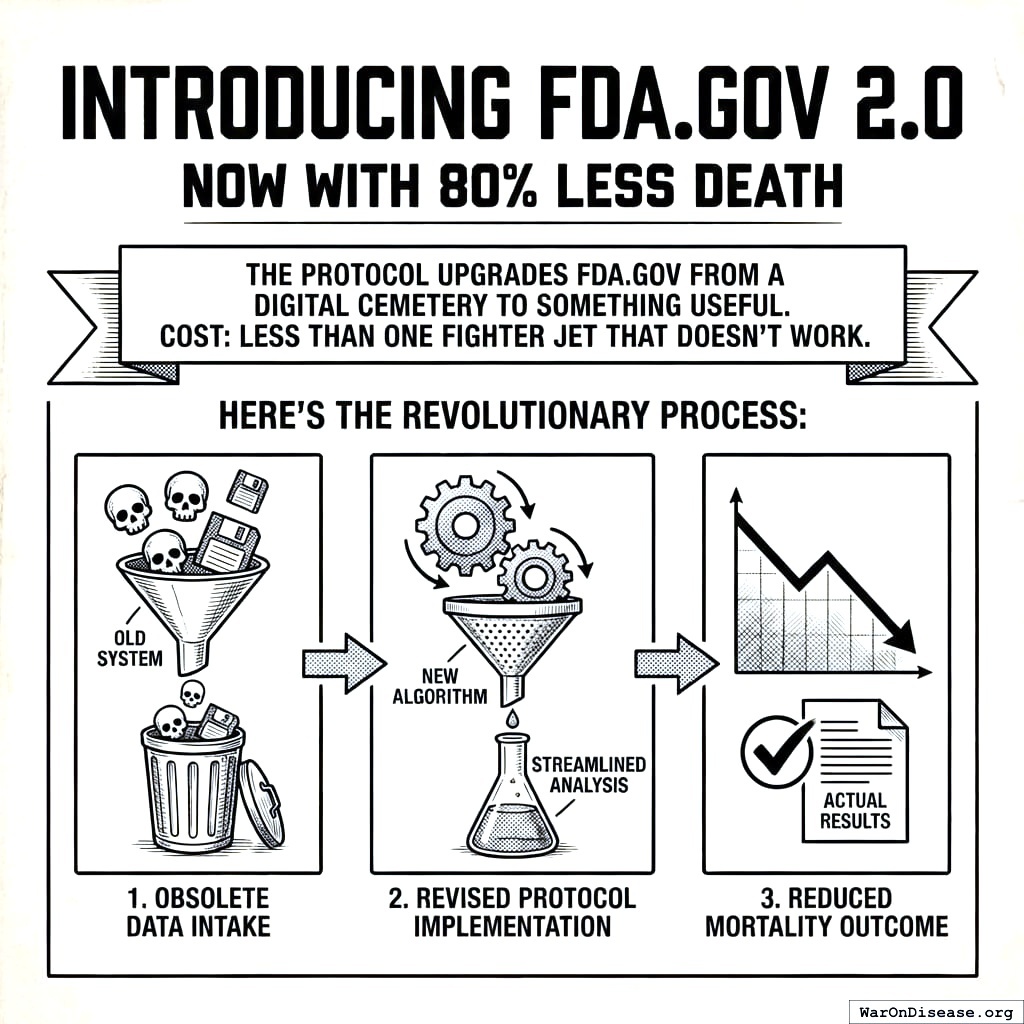
The protocol upgrades FDA.gov from a digital cemetery to something useful. Cost: less than one fighter jet that doesn’t work.
[](../../assets/images/dfda/dfda-section-introducing-fda-gov-2-0-now-with-80-less-death-bw-academic.jpg)
Upgrading the FDA website would save more lives than a fighter jet, cost less than a fighter jet, but we bought the fighter jet.
### Step 1: Type in What’s Killing You

Revolutionary feature: A search box. The FDA’s current website doesn’t have this because they assume you’ve already died.
### Step 2: See What Actually Works (Based on Reality, Not Theory)
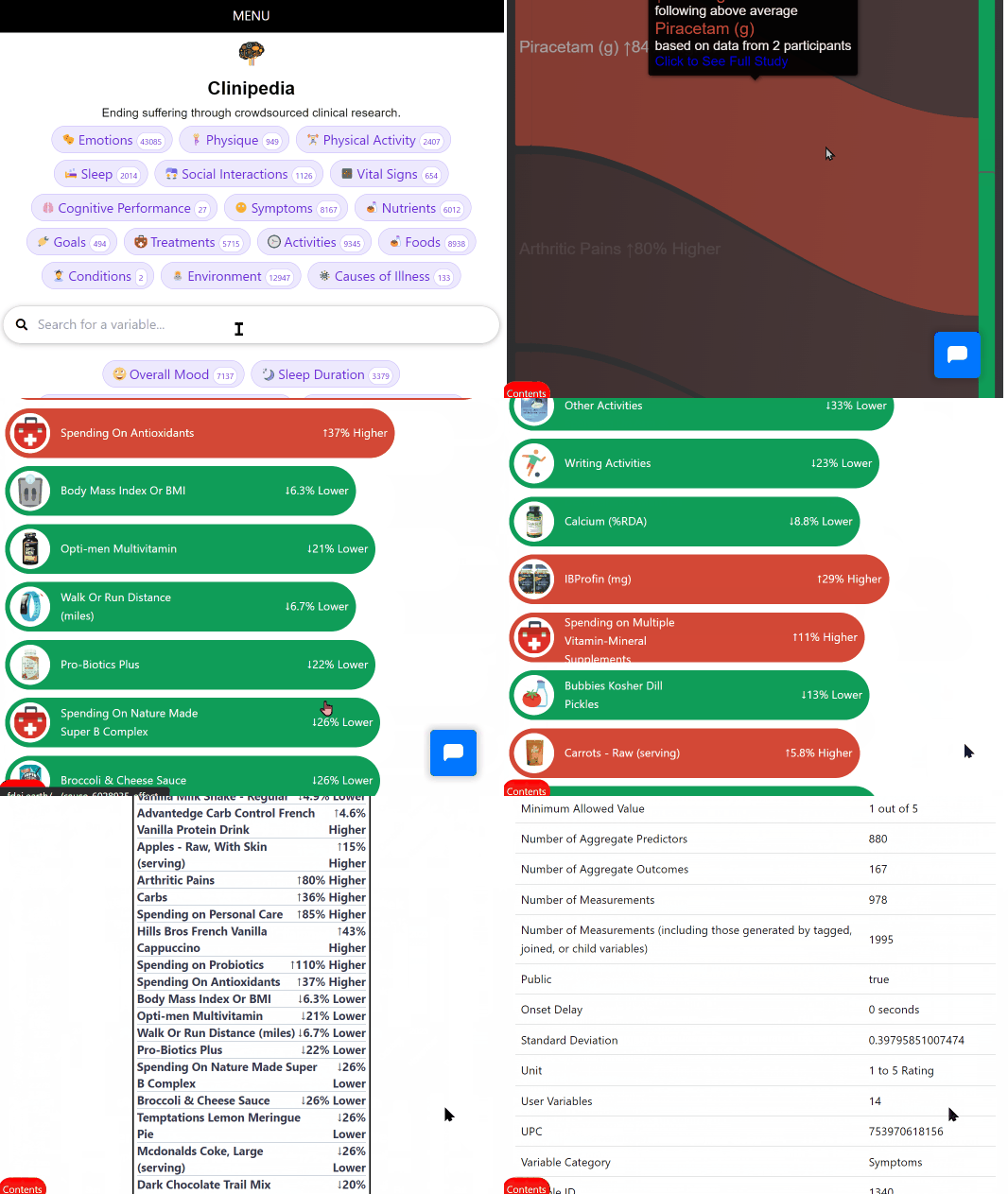
Instead of “This drug is approved for exactly this condition in exactly these patients on exactly Tuesdays,” you get:
“Here’s what happened to 50,000 people who tried this:
- 40% got much better
- 30% got somewhat better
- 20% no change
- 10% grew a third nipple (but a useful one)”
It’s like Consumer Reports, but for not dying.
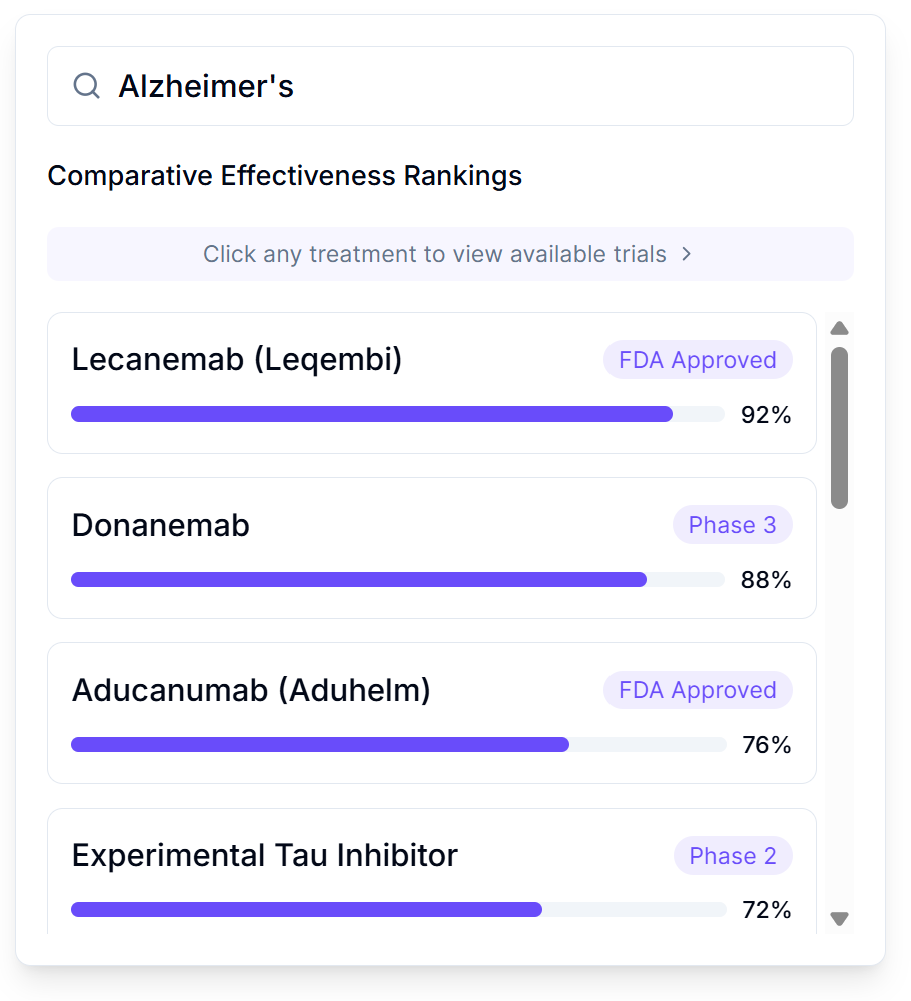
**Treatment Rankings: Every Option, Ranked by Reality**
[](../../assets/images/dfda-comparative-effectiveness-ranking-search.png)
Which pills work better than other pills, in list form. Like a leaderboard for medicine.
Search any condition and see every treatment ranked by real-world effectiveness:
- **FDA Approved treatments** with effectiveness scores from actual patients
- **Phase 3 and Phase 2 trials** you can join right now
- **Experimental options** with preliminary data
- One-click access to join available trials
No more guessing which treatment your doctor half-remembers from a conference. Just clear rankings based on what actually worked for people like you. The current system never publishes negative results. Humanity wastes billions repeating the same failed ideas.
### Step 3: Join a Trial from Your Couch (While Dying Comfortably)
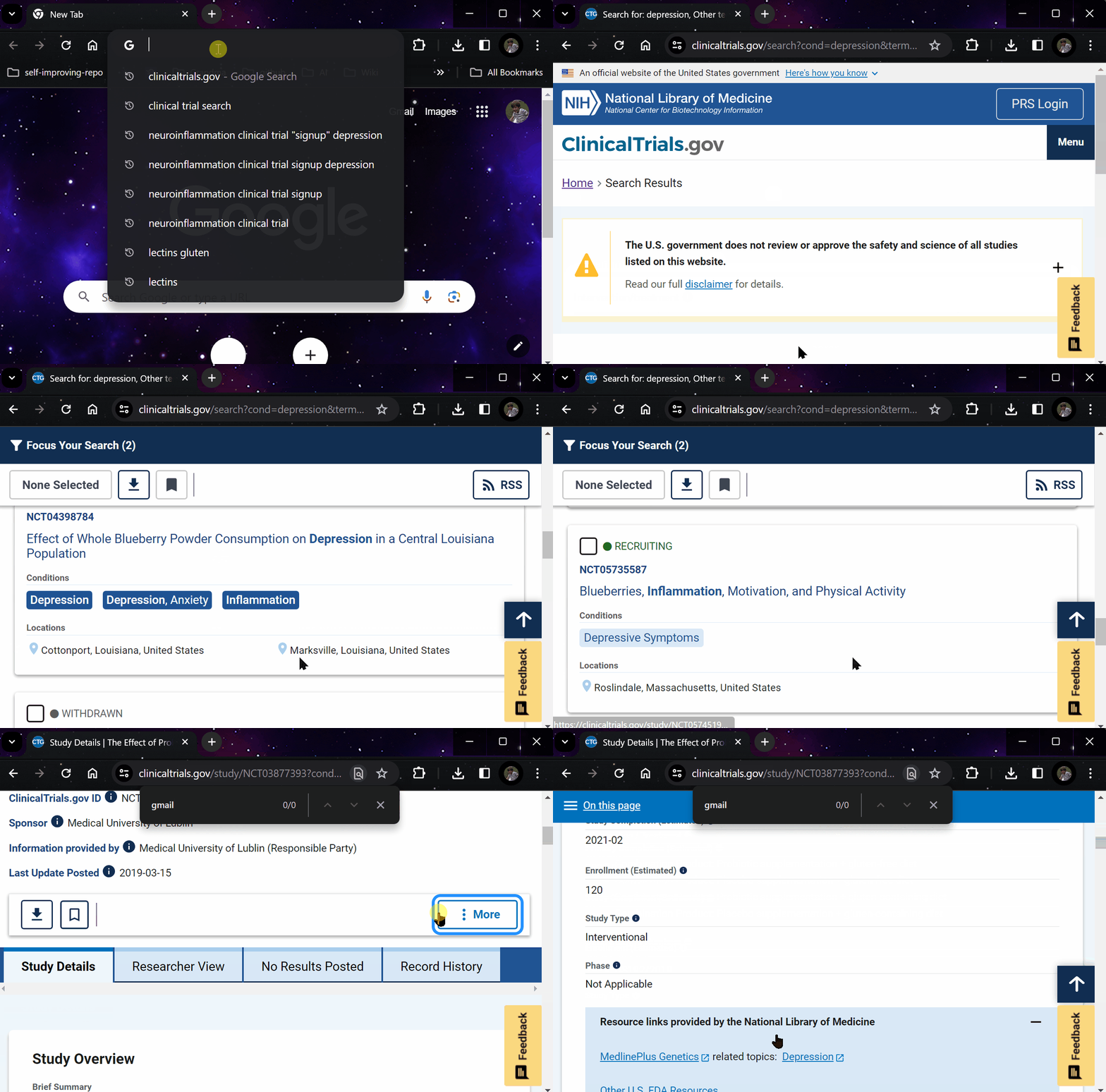
Current system: Drive 500 miles to a university hospital, wait 6 months, get rejected for having the wrong kind of dying.
New system: Click button. Get pills. Report if you die.
Revolutionary!
### Step 4: Get Drugs Delivered Like Pizza (But More Life-Saving)
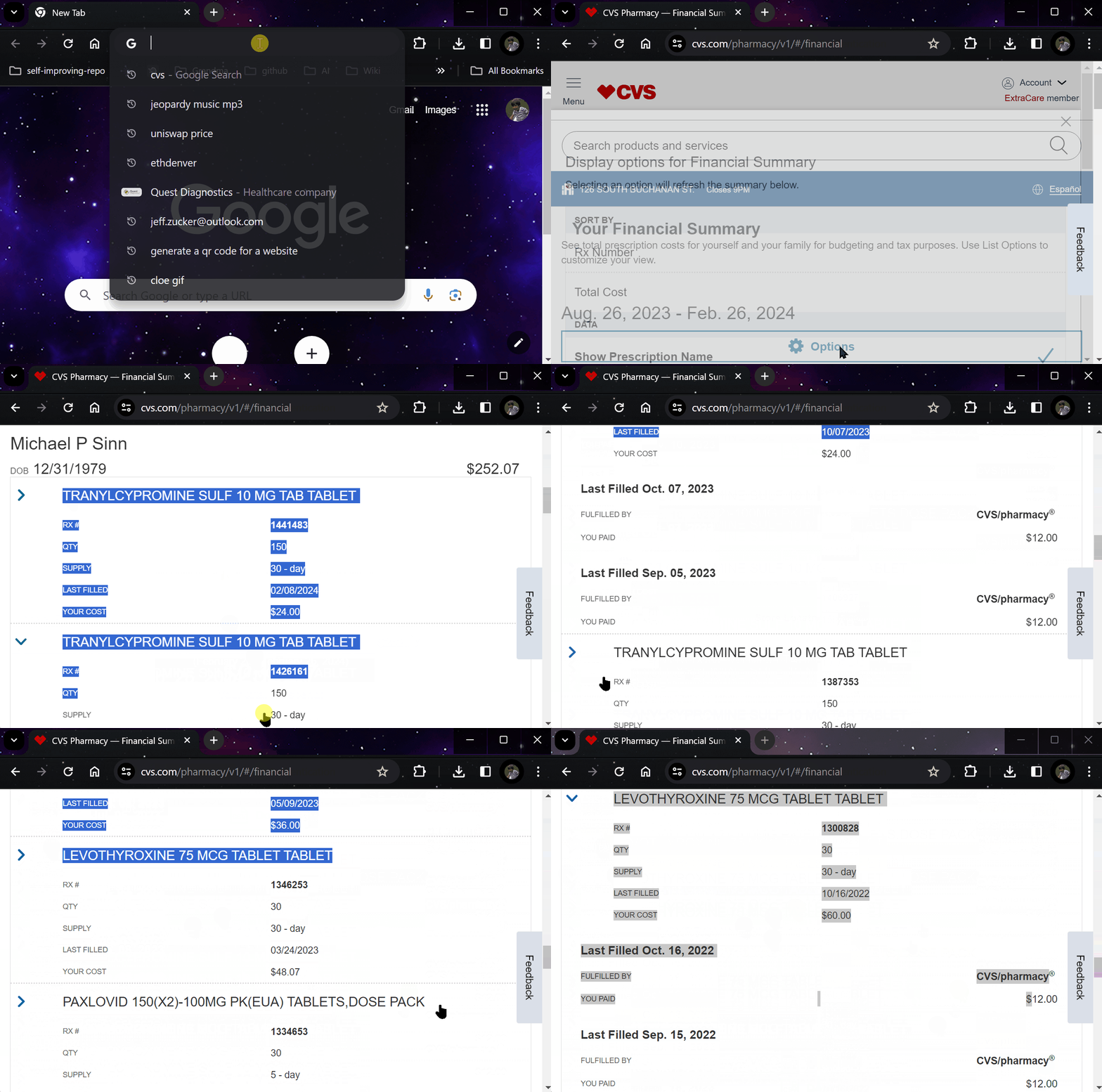
Amazon can deliver a banana costume in 2 hours but experimental medications take 6 months and require seven forms of ID?
Your framework fixes that. Your pharmacy becomes a trial site. Your doctor becomes a researcher. Your dying becomes data.
### Step 5: Publish Results
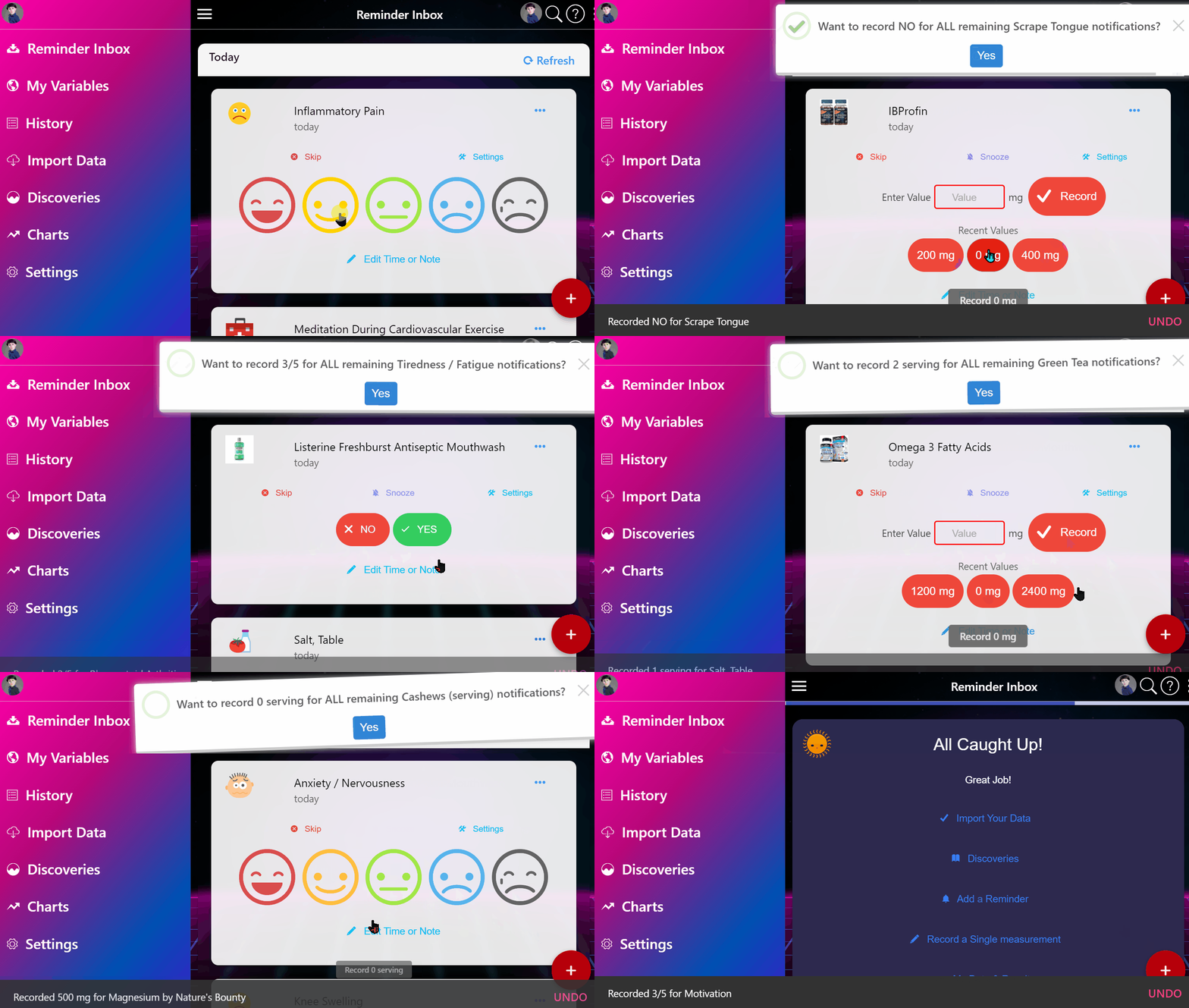
Current system: 500-page case report forms that ask questions like “Rate your suffering on a scale of mauve to burnt sienna.”
New system:
- “Are you dead?” Yes/No
- “If no, how dead do you feel?” Slider bar
- “Any new body parts?” Check all that apply
### Step 6: Everyone Benefits from Everyone’s Suffering
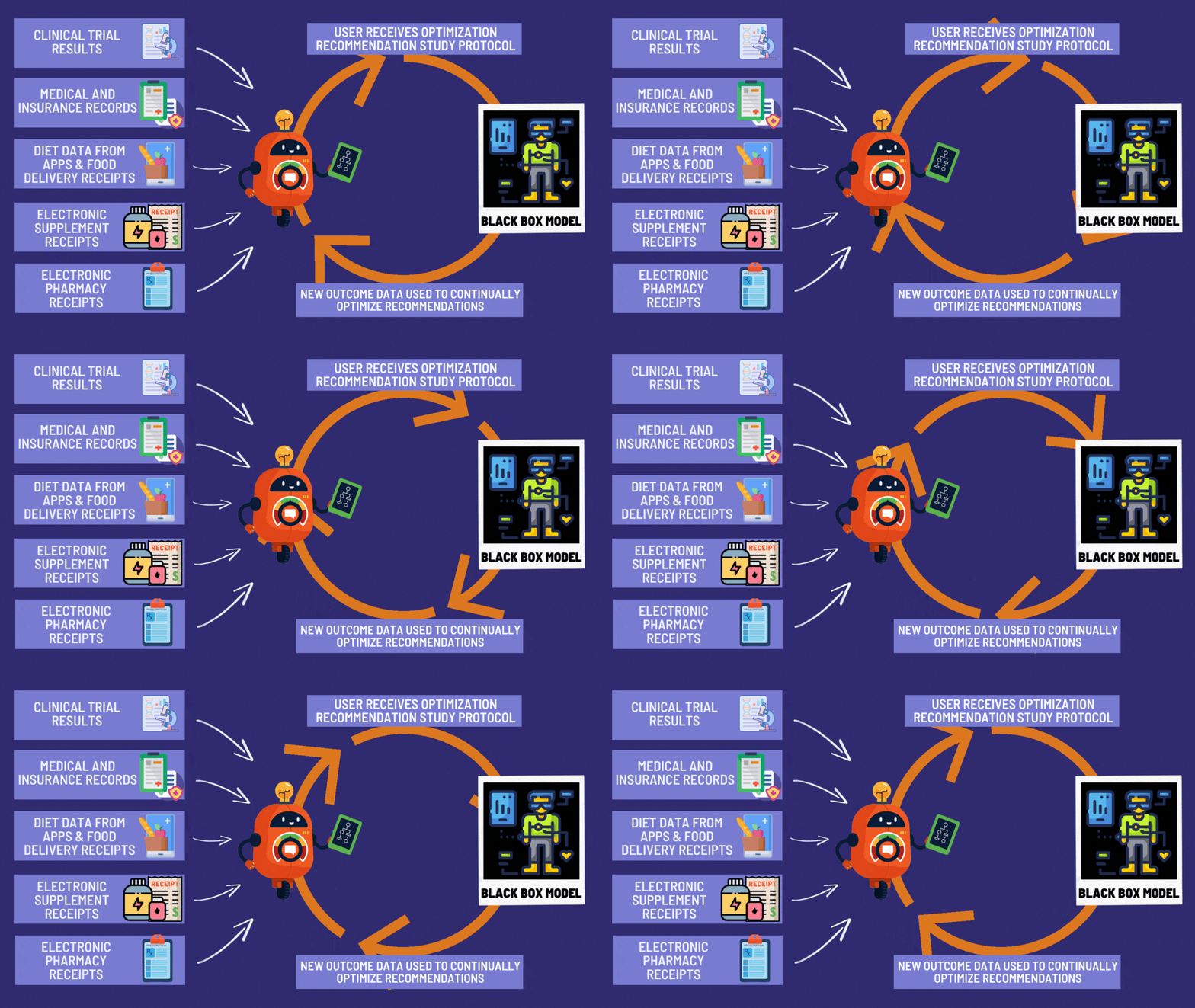
Your data helps the next person. Their data helps you.
Every pill becomes a tiny experiment. Every patient becomes a scientist. Every outcome gets recorded.
You should have done this when you invented writing in 3000 BC.
## Outcome Labels: Nutrition Facts for Drugs
Food has nutrition labels. Cigarettes have warning labels. Drugs have… incomprehensible 40-page inserts written by lawyers having seizures.
**Outcome Labels** fix that. What actually happens when real people try a treatment:
[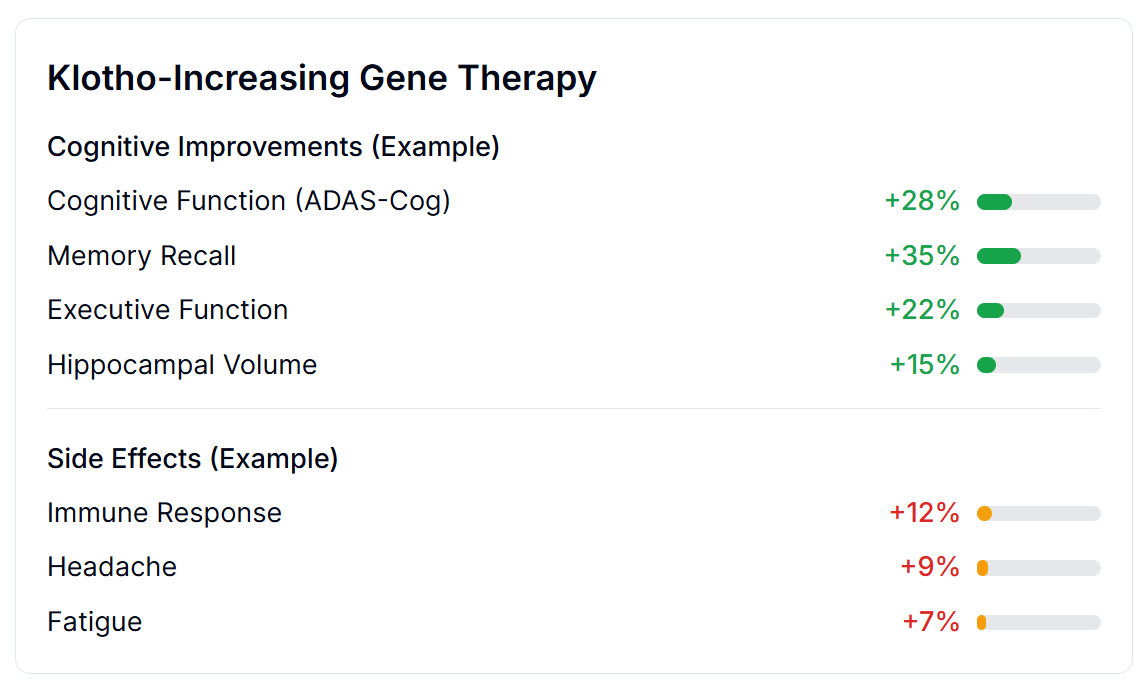](../../assets/images/dfda-outcome-labels.png)
What medicine labels would say if they were honest.
No marketing spin. No 40-page legal disclaimers. Just clear data about what actually happens to people like you.
Here’s what an Outcome Label for depression would actually look like:
**OUTCOME LABEL: Depression Severity**
*Based on 47,832 participants*
**Treatments Ranked by Effect Size**
| Rank | Treatment | Effect | Sample Size | Optimal Dose |
|:-----|:------------|:-------|:------------|:-------------|
| 1 | Bupropion | -28.3% | 2,847 | 300mg |
| 2 | Sertraline | -24.7% | 5,123 | 100mg |
| 3 | Venlafaxine | -21.2% | 1,892 | 150mg |
| … | … | … | … | … |
Every treatment ranked. Drugs, supplements, lifestyle interventions, off-label uses. All compared head-to-head using the same outcome data. No marketing budget required.
[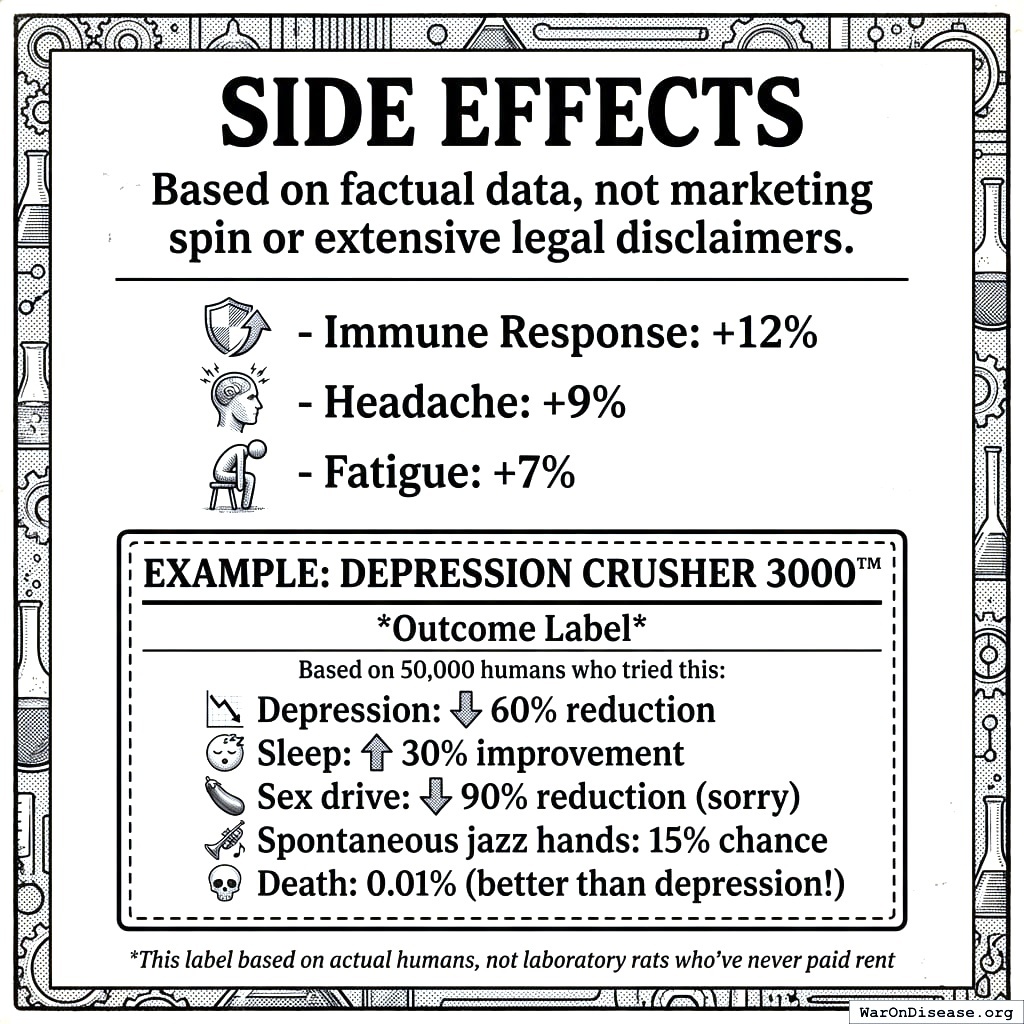](../../assets/images/dfda/dfda-section-side-effects-bw-academic.jpg)
The Depression Crusher 3000. Improves your mood 60 percent, ruins your sex life 40 percent. Every medicine is a negotiation with your body.
## Your Personal Death-Prevention Assistant: The FDAi
Every citizen should get one of these at birth. It monitors their health, finds treatments matched to their biology, and adjusts dosing in real time. The technology has existed for two decades. Your species used it to count steps.
Everyone gets a superintelligent doctor that lives in their phone and doesn’t judge them for Googling “is my poop normal?”
The **FDAi** (Food and Drug Artificial intelligence) is like Siri, but useful. Instead of mishearing your question and opening a Wikipedia article about Serbia, it tells you how not to die.
**You**: “I have diabetes and my foot fell off.” **FDAi**: “Based on 50,000 similar cases, here’s what worked:
- 60% success: Reattachment surgery + Drug A
- 30% success: Prosthetic foot + Drug B
- 10% success: Hopping lessons + Prayer
- 0% success: Essential oils (but your remaining foot will smell lavender-fresh)”
It connects to your wearables, apps, and medical records to find what’s killing you while your doctor is still trying to remember your name. Every doctor who ever lived, in your pocket, and they actually agree on something.
It also does something no doctor can: precision dosing. By analyzing what dose preceded your best outcomes, it generates personalized recommendations. Not “take some magnesium.” Instead: “Your sleep quality was highest after 400mg of Magnesium over the previous 24 hours.” Optimal doses derived from your data, not a study of 36 college students in 1997.
## Making It Legal to Not Die
This requires a law: the [Right to Trial and FDA Upgrade Act](https://papers.acceleratedmedicine.org/right-to-trial.html). It says people can try things that might help them, and what happens gets written down so other people can see what worked.
The fact that this requires a law tells you everything about your species.
## The Business Model: How Everyone Profits Except Disease
### How Companies Register Treatments (5 Minutes, Zero Approval Needed)
**Any company** - pharma, supplements, food, interventions - can instantly create a trial:
1. **Register treatment** on a public portal (name, ingredients, condition, price)
2. **Set treatment price** (what you charge patients - covers manufacturing + delivery)
3. **Get automatic liability insurance** (built into protocol governance)
4. **Trial goes live immediately** - appears in search results, ranked by existing data
5. **Patients join** based on rankings → You collect zero-cost data on whether it works
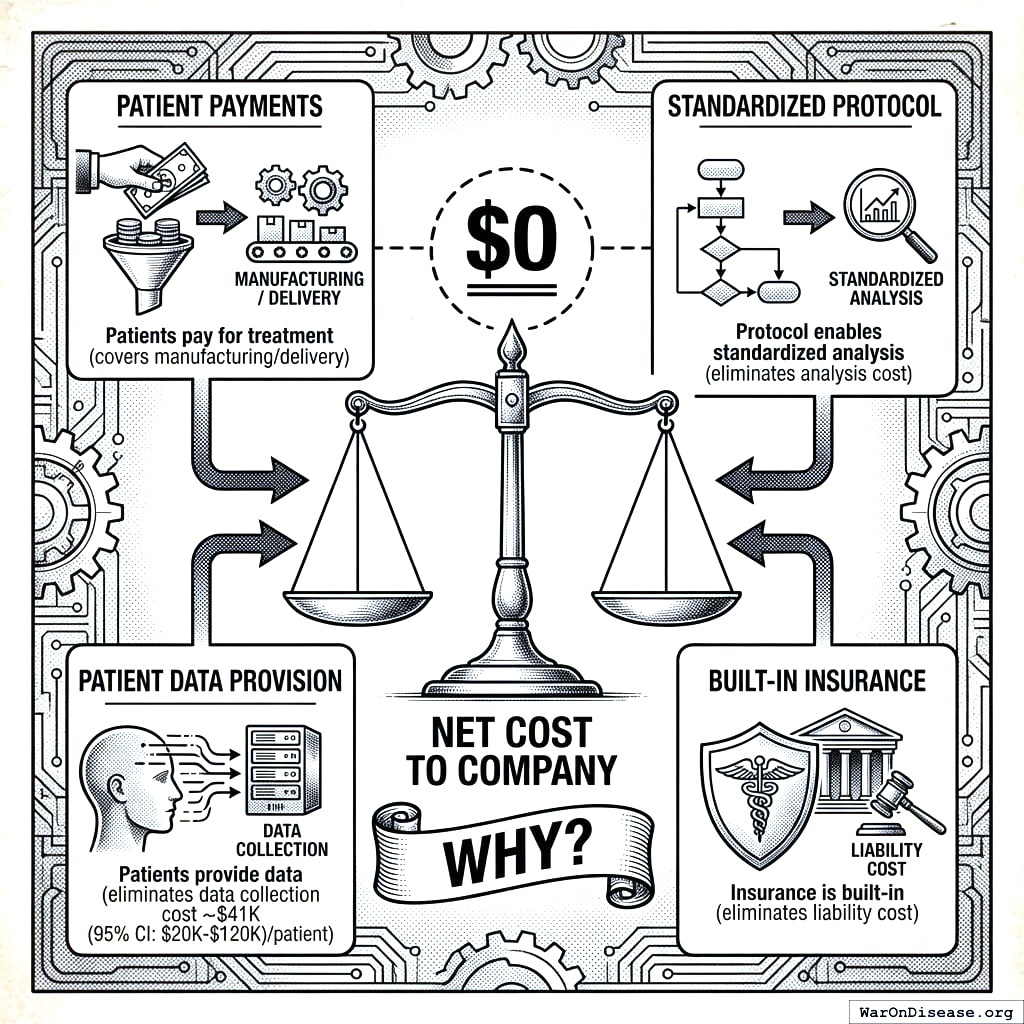
#### Net cost to company: \$0
[](../../assets/images/dfda/dfda-section-net-cost-to-company-0-bw-academic.jpg)
Patients pay for their own medicine, then you give them their money back, and somehow everyone profits. Economics is confusing.
**Why?**
- Patients pay for treatment (covers manufacturing/delivery)
- Patients provide data (eliminates data collection cost ~[\$41,000 (95% CI: \$20,000-\$120,000)](../../knowledge/appendix/parameters-and-calculations.llms.md#sec-traditional_phase3_cost_per_patient)/patient)
- Protocol enables standardized analysis (eliminates analysis cost)
- Insurance is built-in (eliminates liability cost)
### The Payment Flow
[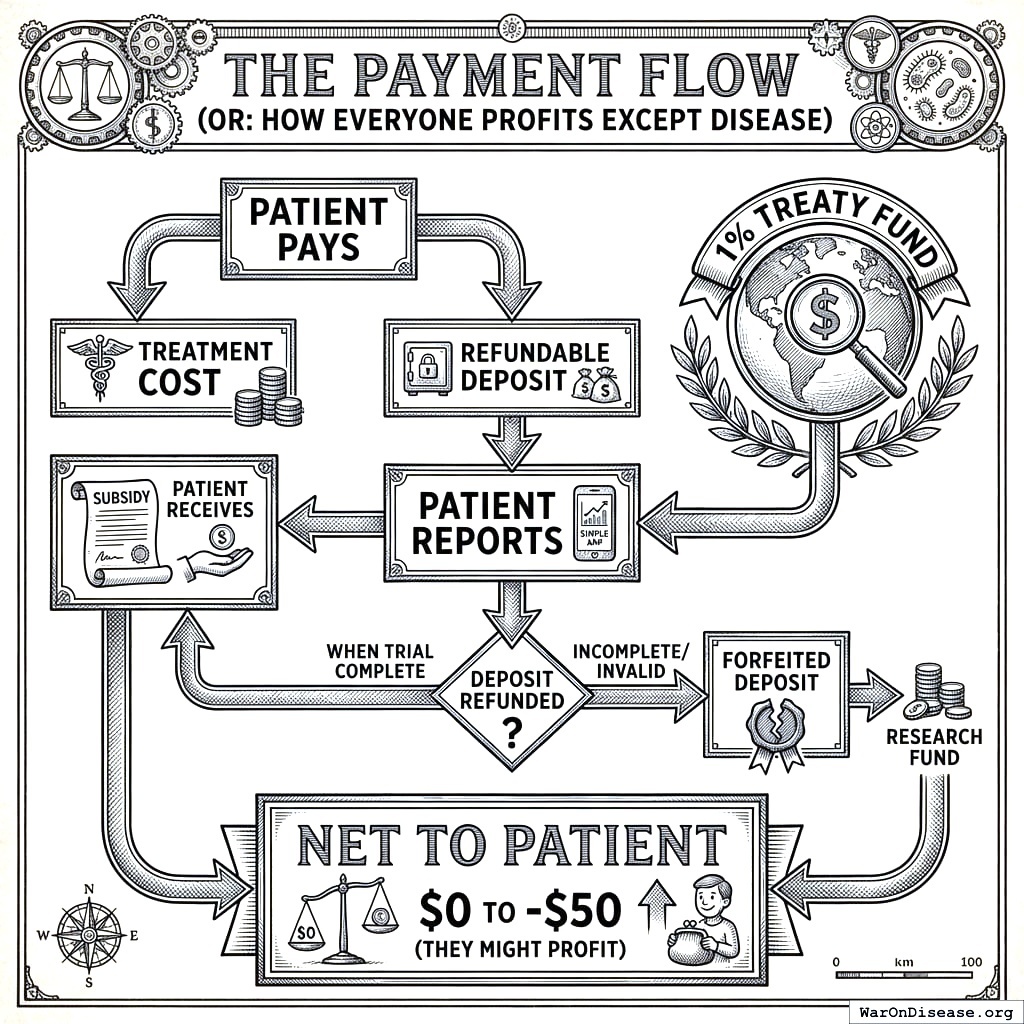](../../assets/images/dfda/dfda-section-the-payment-flow-or-how-everyone-profits-except-disease-bw-academic.jpg)
Money goes from patient to fund to patient to company to fund to patient. It’s a circle, like water cycle but for dollars.
**Patient pays:** Treatment cost + Refundable deposit **Patient receives:** Subsidy (from a [1% Treaty](https://manual.warondisease.org/knowledge/solution/1-percent-treaty.html)^([16](../references.llms.md#ref-1-percent-treaty-paper-2025)) ^([17](../references.llms.md#ref-1-pct-treaty-impact-paper-2025)) Fund) **Patient reports:** Outcomes via simple app **Deposit refunded:** When trial complete **Net cost to patient:** zero. Some patients profit up to \$50.
#### Example
- Patient joins trial for experimental migraine treatment (\$100/month)
- Pays: \$100 treatment + \$50 deposit = \$150
- Receives: \$125 subsidy
- Out of pocket: \$25
- Completes trial, reports outcomes
- Gets back: \$50 deposit
- **Net: +\$25 profit + potentially cures migraines**
[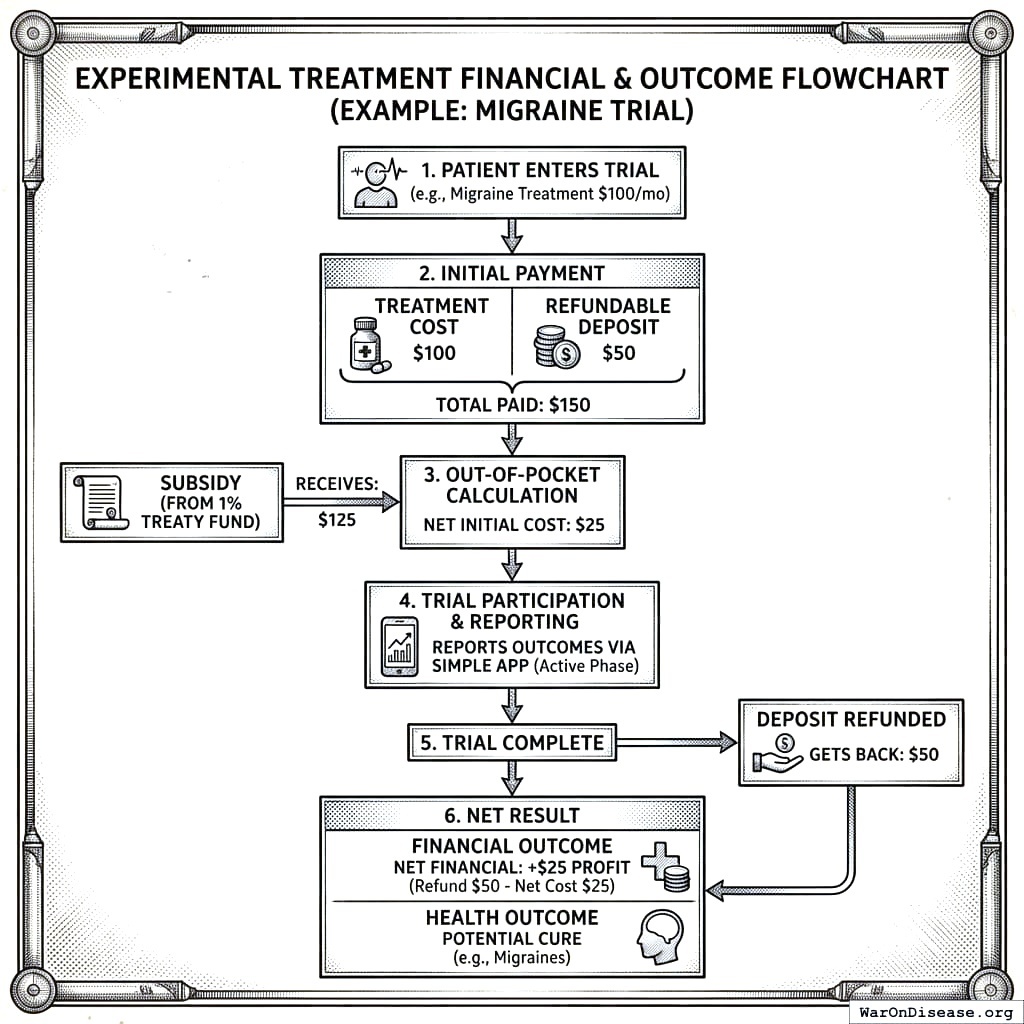](../../assets/images/dfda/dfda-section-economic-flow-diagram-bw-academic.jpg)
Everyone gets paid, patient pays nothing. If this sounds impossible, you’re thinking like an economist instead of a magician.
#### Company receives
[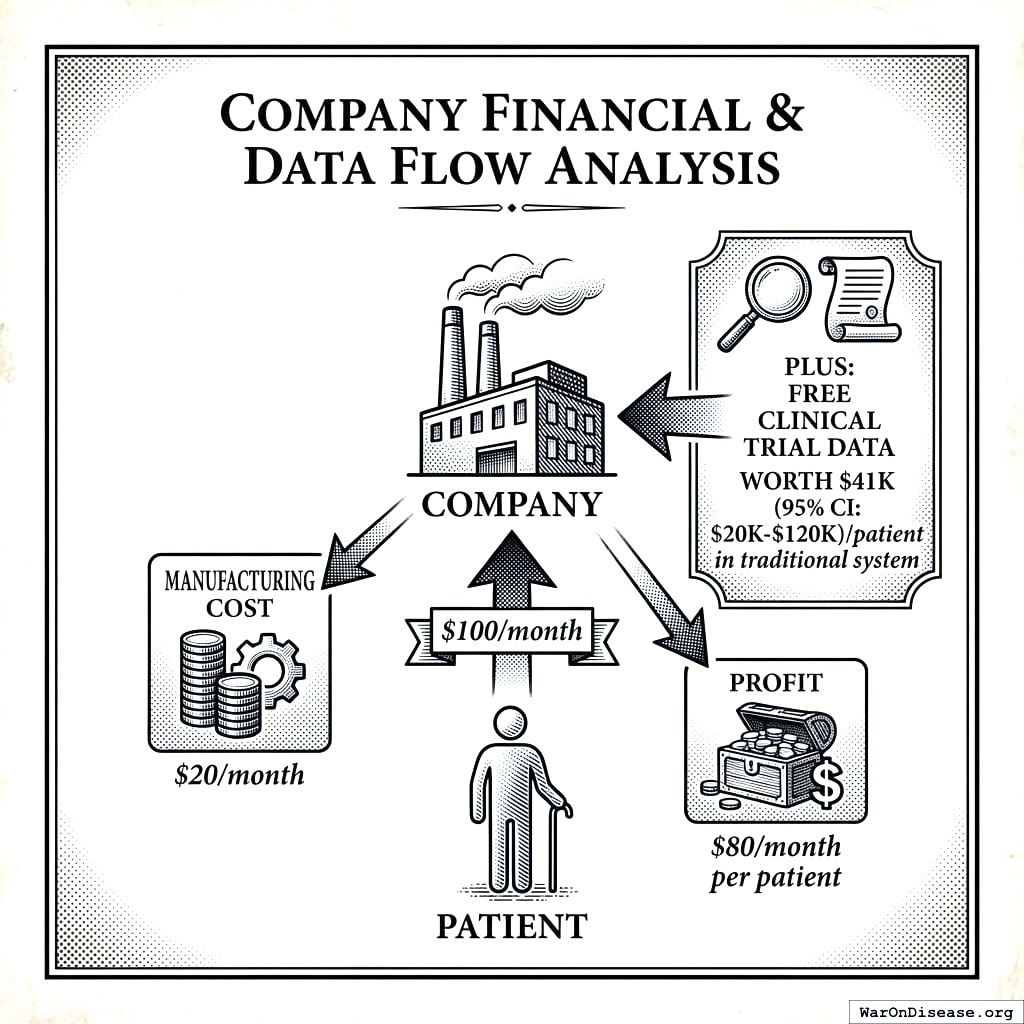](../../assets/images/dfda/dfda-section-company-receives-bw-academic.jpg)
Companies make a little money from selling pills and a lot of money from knowing which pills work. Information is expensive, apparently.
- \$100/month from patient
- Manufacturing cost: \$20/month
- Profit: \$80/month per patient
- Plus: Free clinical trial data worth [\$41,000 (95% CI: \$20,000-\$120,000)](../../knowledge/appendix/parameters-and-calculations.llms.md#sec-traditional_phase3_cost_per_patient)/patient in traditional system
### Why This Creates Vastly More Research Capacity
| | Traditional Model | Decentralized Protocol |
|:---|:---|:---|
| **Start** | Research ideas | Research ideas |
| **Gatekeeping** | Grant committees select the few | Register instantly |
| **Enrollment** | Recruit from limited pool | Patients decide by joining |
| **Cost to company** | \$57M per trial | \$0 (patients pay for treatment) |
| **Throughput** | ~10 trials/year per company | Thousands of trials simultaneously |
**This is why 95% of rare diseases have no treatments.** Traditional funding can’t afford to test everything. This decentralized protocol enables testing EVERYTHING because:
- No approval bottleneck (instant registration)
- No funding bottleneck (patients pay for treatment)
- No data collection bottleneck (patients provide data)
- No disease too rare (if 100 patients exist globally, trial can run profitably)
**Traditional trial:** Pharma spends \$57M, tests most profitable drug only **Decentralized trial:** Pharma spends \$0, tests everything including supplements, food, lifestyle, off-patent drugs
A [1% Treaty](https://manual.warondisease.org/knowledge/solution/1-percent-treaty.html) Fund doesn’t fund trials directly. **It subsidizes participation, which pays for a self-sustaining system that funds all research.**
[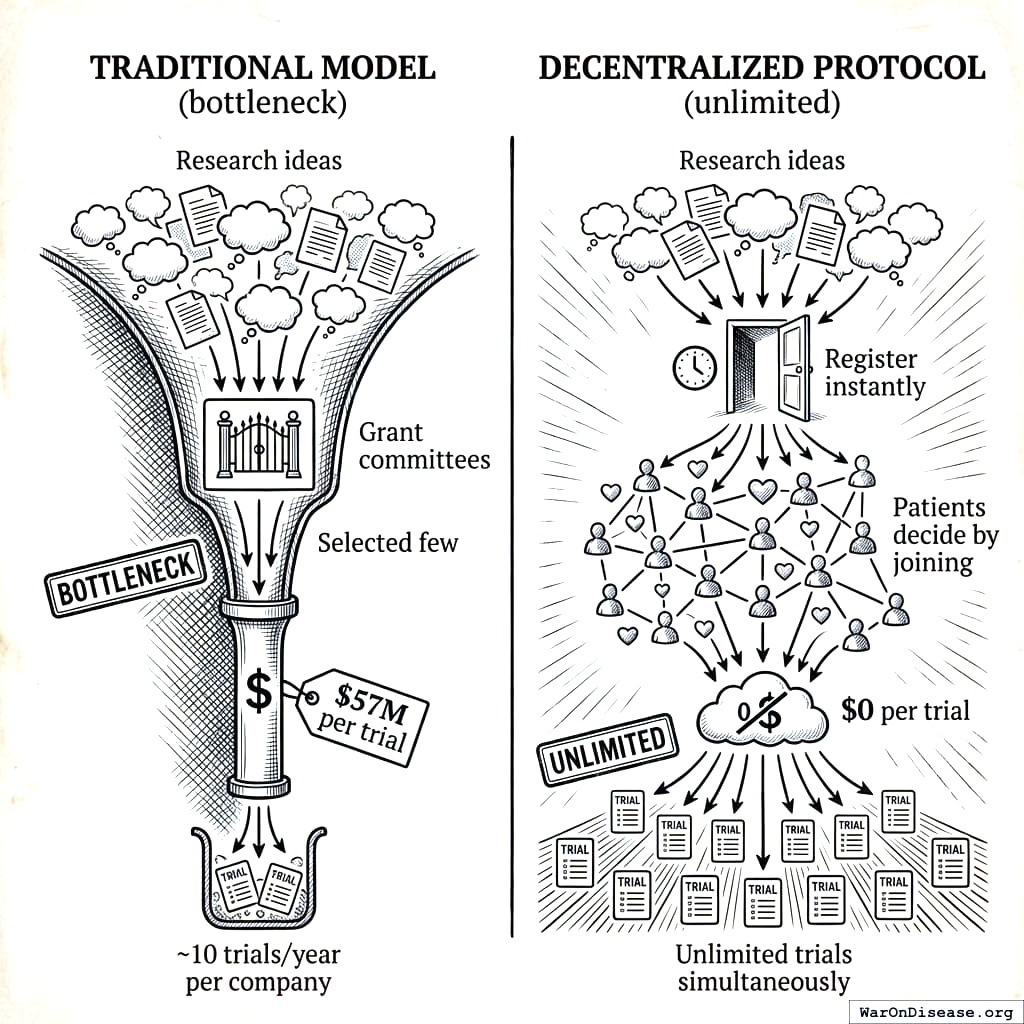](../../assets/images/dfda/dfda-section-bottleneck-vs-protocol-process-bw-academic.jpg)
One research lab doing one thing at a time versus a million people doing a million things at once. Speed difference is noticeable.
## The Money Shot: How to Save 95% on Not Killing People
| Problem to Fix | Current Insanity | New Reality | Money Saved | Lives Saved |
|:---|:---|:---|:---|:---|
| Clinical Phase Timeline | **Over a decade^([18](../references.llms.md#ref-drug-development-timeline-17-years))** | **2-3 years** | ~7 years of waiting eliminated | ~50,000/year^([19](../references.llms.md#ref-beta-blocker-drug-lag-deaths)) |
| Cost per trial | **\$57 million**^([20](../references.llms.md#ref-clinical-trial-cost-breakdown)) | **\$2 million** | \$55 million | Absurd ROI |
| Who can participate | **13.9% of patients^([3](../references.llms.md#ref-antidepressant-trial-exclusion-rates))** | **100% of patients** | [86.1%](../../knowledge/appendix/parameters-and-calculations.llms.md#sec-antidepressant_trial_exclusion_rate) exclusion rate eliminated | Everyone |
| Rare diseases with treatments | **5%^([5](../references.llms.md#ref-95-pct-diseases-no-treatment))** | **Eventually 100%** | Priceless | Millions |
[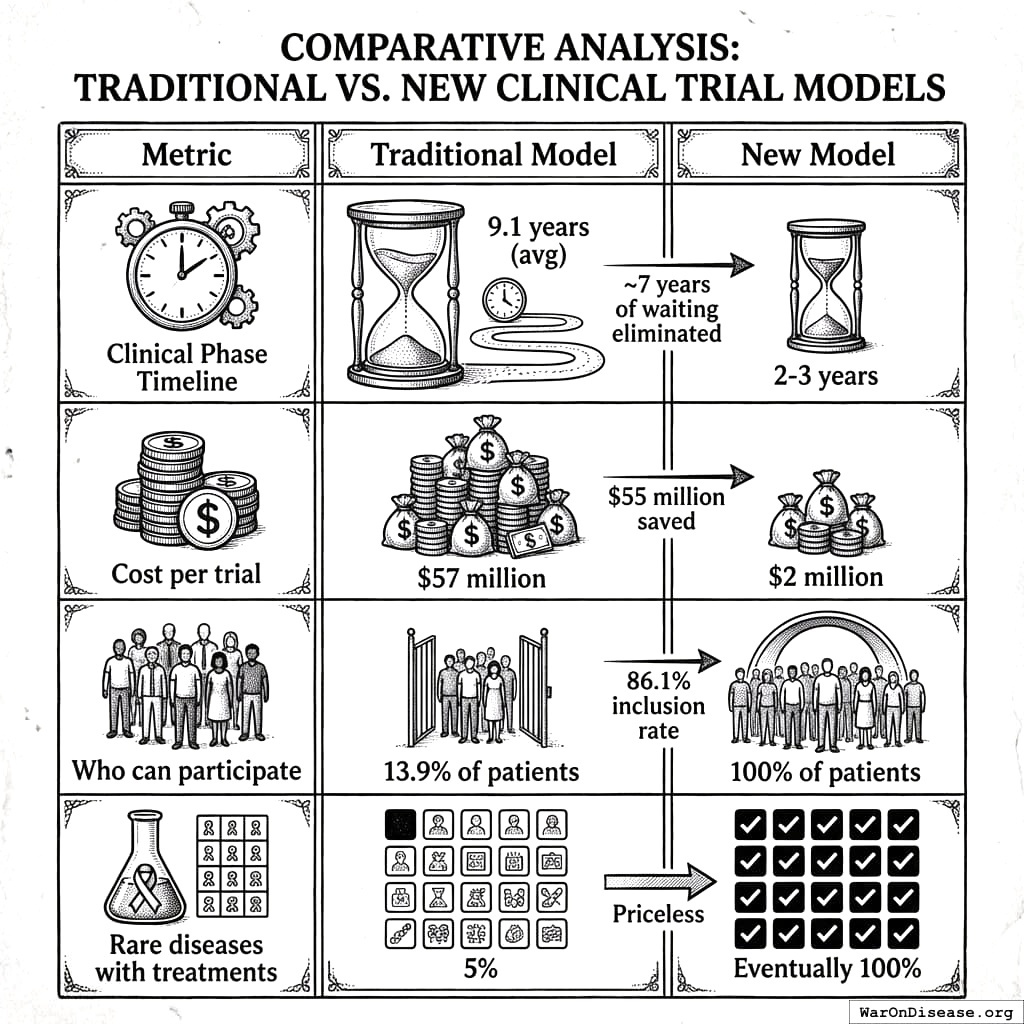](../../assets/images/dfda/dfda-section-impact-comparison-matrix-bw-academic.jpg)
How we do clinical trials now: slow, expensive, broken. How we could do them: fast, cheap, working. The difference is stark.
### The Itemized Receipt of Eliminated Stupidity
| Expense Category | Traditional Clinical Trial | Your Decentralized Framework Cost | Savings | What It Actually Is |
|:---|:---|:---|:---|:---|
| Data Management | \$198,014 | \$10,000 | 94.9% | Excel spreadsheets with fear |
| IRB Approval | \$324,081 | \$5,000 | 98.5% | Permission slips for adults |
| IRB Amendments | \$6,347 | \$0 | 100% | Permission to fix typos |
| Source Data Verification | \$1,486,250 | \$25,000 | 98.3% | Checking if you lied about dying |
| Patient Recruitment | \$805,785 | \$15,000 | 98.1% | Facebook ads for dying people |
| Patient Retention | \$76,879 | \$20,000 | 74% | Bribes to keep dying people interested |
| Research Associates | \$2,379,605 | \$150,000 | 93.7% | People who watch you take pills |
| Physicians | \$1,966,621 | \$100,000 | 94.9% | Doctors pretending to be scientists |
| Clinical Procedures | \$5,937,819 | \$1,000,000 | 83.2% | Poking you with expensive things |
| Laboratory | \$2,325,922 | \$500,000 | 78.5% | Testing if your pee is still pee |
| Site Recruitment | \$849,158 | \$0 | 100% | Bribing hospitals to participate |
| Site Retention | \$4,461,322 | \$0 | 100% | Bribing hospitals to not quit |
| Administrative Staff | \$7,229,968 | \$100,000 | 98.6% | People who file the files |
| Site Monitoring | \$4,456,717 | \$0 | 100% | People who watch the people who watch you |
| Site Overhead | \$7,386,816 | \$0 | 100% | Electricity for the filing cabinets |
| All Other | \$17,096,703 | \$100,000 | 99.4% | Nobody knows but it’s expensive |
| **TOTAL** | **\$56,988,007**^([20](../references.llms.md#ref-clinical-trial-cost-breakdown)) | **\$2,025,000** | **95.7%** | **The price of bureaucracy** |
This eliminates \$55 million per trial.
## Building Rails, Not Trains
Here’s what you’re NOT doing: building a government platform that competes with existing medical technology companies (that would be very human of you).
[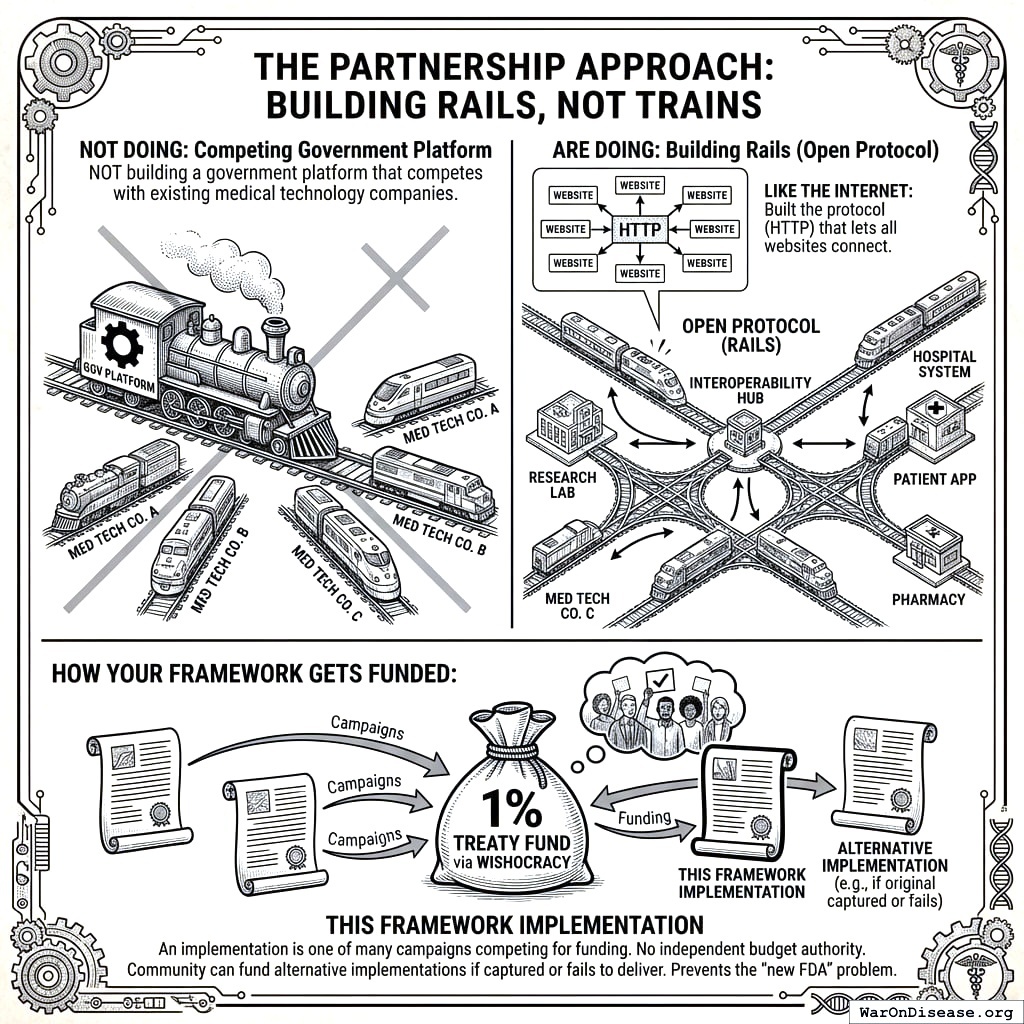](../../assets/images/dfda/dfda-section-the-partnership-approach-building-rails-not-trains-bw-academic.jpg)
One company owning the entire railway versus everyone sharing the tracks. Sharing is cheaper and less monopolistic.
Here’s what you ARE doing: building an open protocol that lets all existing platforms talk to each other.
Think of it like the internet. We didn’t build one website that everyone has to use. We built HTTP, the protocol that lets all websites connect. Same idea.
**How it gets funded:** An implementation of this framework is one of many campaigns competing for funding from the [1% Treaty](https://manual.warondisease.org/knowledge/solution/1-percent-treaty.html) Fund via [Wishocracy](../../knowledge/solution/wishocracy.llms.md)^([21](../references.llms.md#ref-wishocracy-paper-2025)). No independent budget authority. If one implementation gets captured or fails, the community funds a different one. This prevents the “new FDA” problem (where you build a second bureaucracy that becomes the first bureaucracy).
### People Who Already Built Most of This
Multiple companies have already built decentralized clinical trial platforms. They’ve collectively raised hundreds of millions in venture funding^([22](../references.llms.md#ref-dct-platform-funding-others)). They’re good at it. They have users. They have infrastructure. Why compete? Partner.
**The open standard provides**:
- Common data exchange format (like email protocols)
- Federated data network (data stays in Epic/Cerner/Apple Health systems)
- Treatment ranking algorithms (open source, anyone can verify)
- Trial matching services (connects patients to ANY platform)
**Existing platforms provide**:
- Patient-facing apps and interfaces
- Trial management tools
- Sponsor relationships
- Regional expertise
[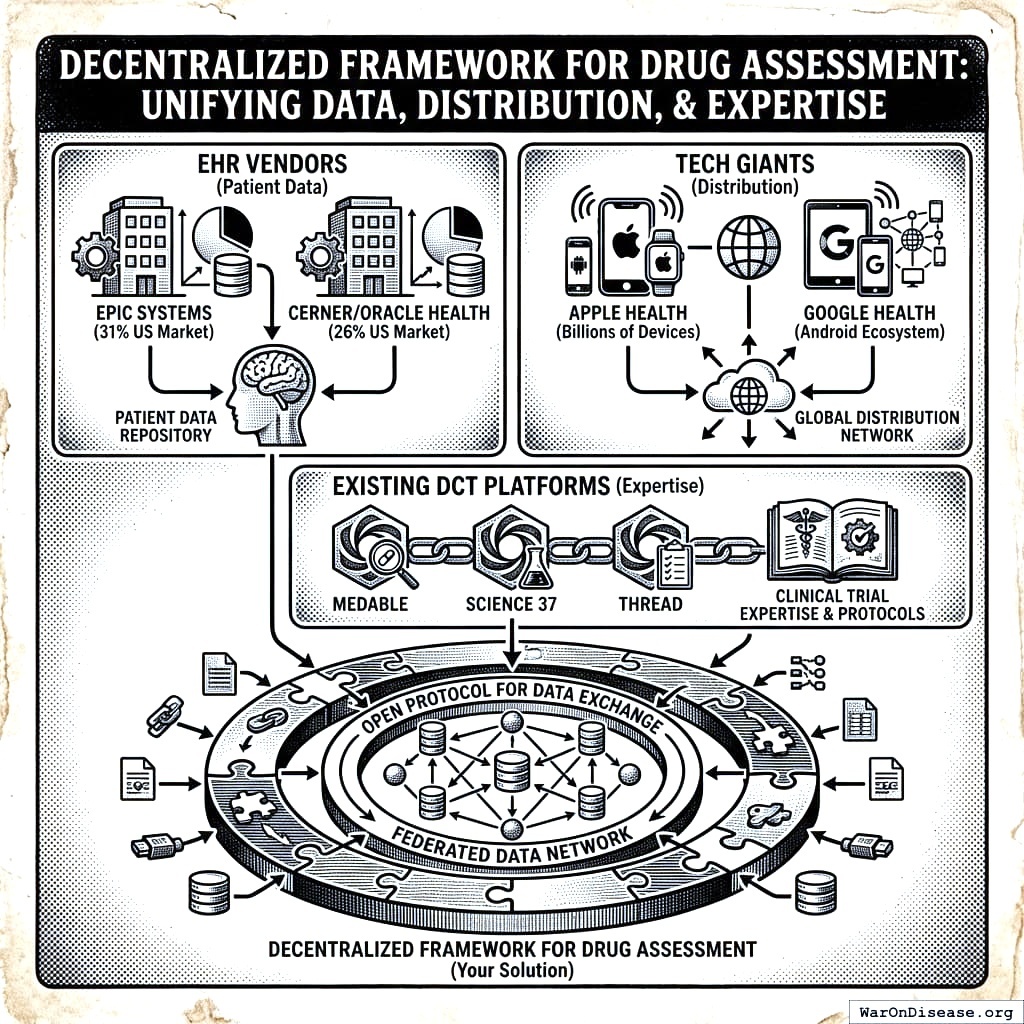](../../assets/images/dfda/dfda-section-federated-network-architecture-bw-academic.jpg)
The new system plugs into all the old systems without replacing them. Like adding a power strip instead of rewiring your entire house.
### Federated, Not Centralized
Data doesn’t move to a central database. It stays where it is. Everyone keeps their toys.
- Epic systems keep their data
- Apple Health keeps its data
- Cerner keeps its data
Your decentralized protocol runs queries across systems without moving data. Like asking every library in the world a question without stealing their books. Federated data networks already do this with 300M+ patient records.
[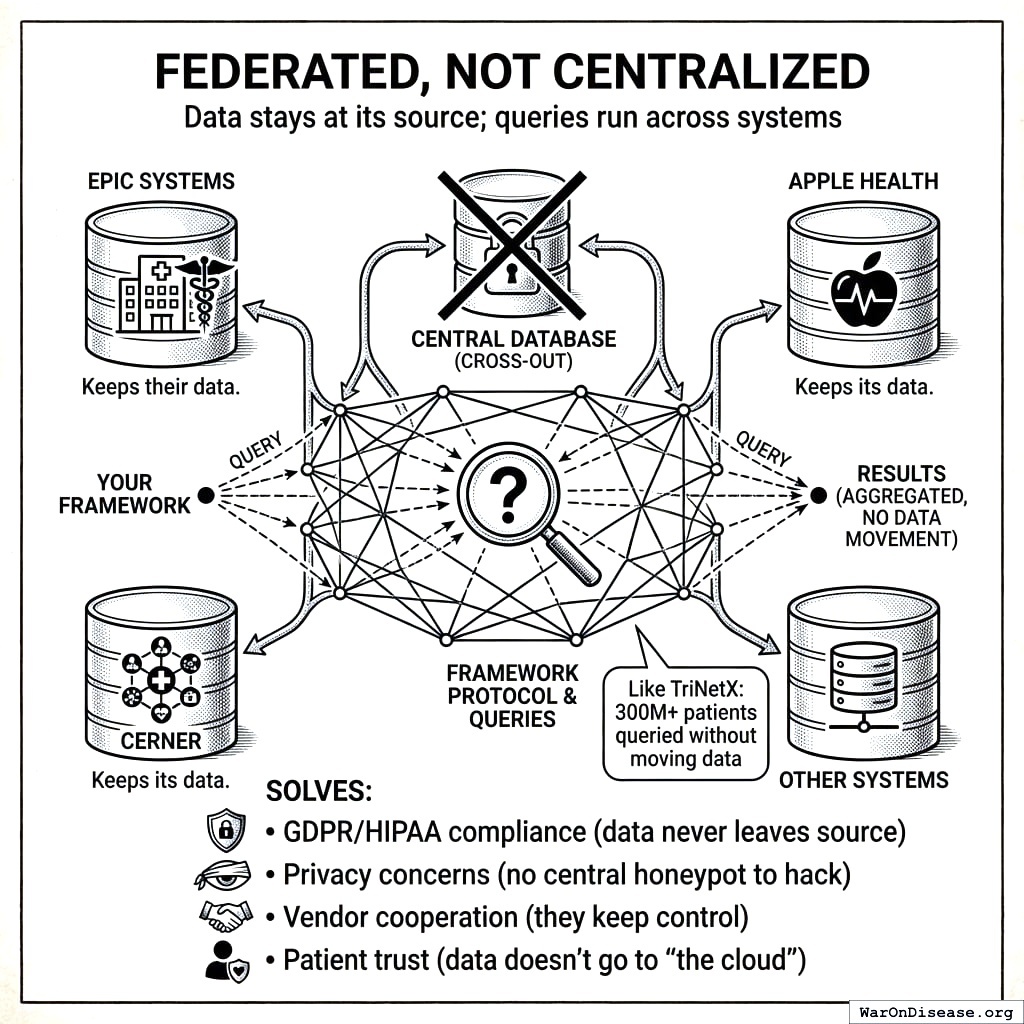](../../assets/images/dfda/dfda-section-federated-not-centralized-bw-academic.jpg)
Instead of copying everyone’s medical data to one place, we ask questions to many places and combine the answers. Your data stays where it is, we just visit.
This solves:
- GDPR/HIPAA compliance (data never leaves source)
- Privacy concerns (no central honeypot to hack)
- Vendor cooperation (they keep control)
- Patient trust (data doesn’t go to “the cloud”)
## Why This Works: The Mathematical Impossibility of Committees
~200 FDA bureaucrats^([23](../references.llms.md#ref-fda-reviewer-count)) decide what [8 billion](../../knowledge/appendix/parameters-and-calculations.llms.md#sec-global_population_2024) people can try when dying. Here’s the math on why that can’t work:
**The FDA approves ~50 new drugs per year.** There are 10,000 known diseases. At that rate, covering every disease once takes 200 years. And that’s before you account for the fact that different patients respond differently to the same drug based on genetics, age, comorbidities, and whether they had breakfast.
**The real bottleneck isn’t speed; it’s information.** Centralized approval assumes 200 people can evaluate what works for [8 billion](../../knowledge/appendix/parameters-and-calculations.llms.md#sec-global_population_2024) genetically unique humans. They can’t. A decentralized system where millions of patients generate real-world evidence processes more therapeutic information in a month than the FDA generates in a decade.
The FDA doesn’t know:
- What disease **you** have (they haven’t met you)
- How **your** body responds to treatments (genetics are unique)
- What risks **you’re** willing to take (some prefer death to side effects, others the reverse)
- Whether **you’d** rather die trying or die waiting (only you can answer this)
But they decide for you anyway. This isn’t ideology. It’s information theory. You mathematically cannot centralize medical decisions for [8 billion](../../knowledge/appendix/parameters-and-calculations.llms.md#sec-global_population_2024) unique people.
Every civilization I’ve worked with tried a centralized approval committee first. Every single one abandoned it, once someone did the math and realized a roomful of experts reviewing one drug at a time is just a queue with a death rate.
## The Future: Where Death Becomes Embarrassing
### 2027: The Beginning of the End of Dying Slowly
FDA.gov becomes actually useful. Millions join trials from home. The first “Wikipedia disease” gets cured entirely through crowdsourced trials. The FDA claims credit.
[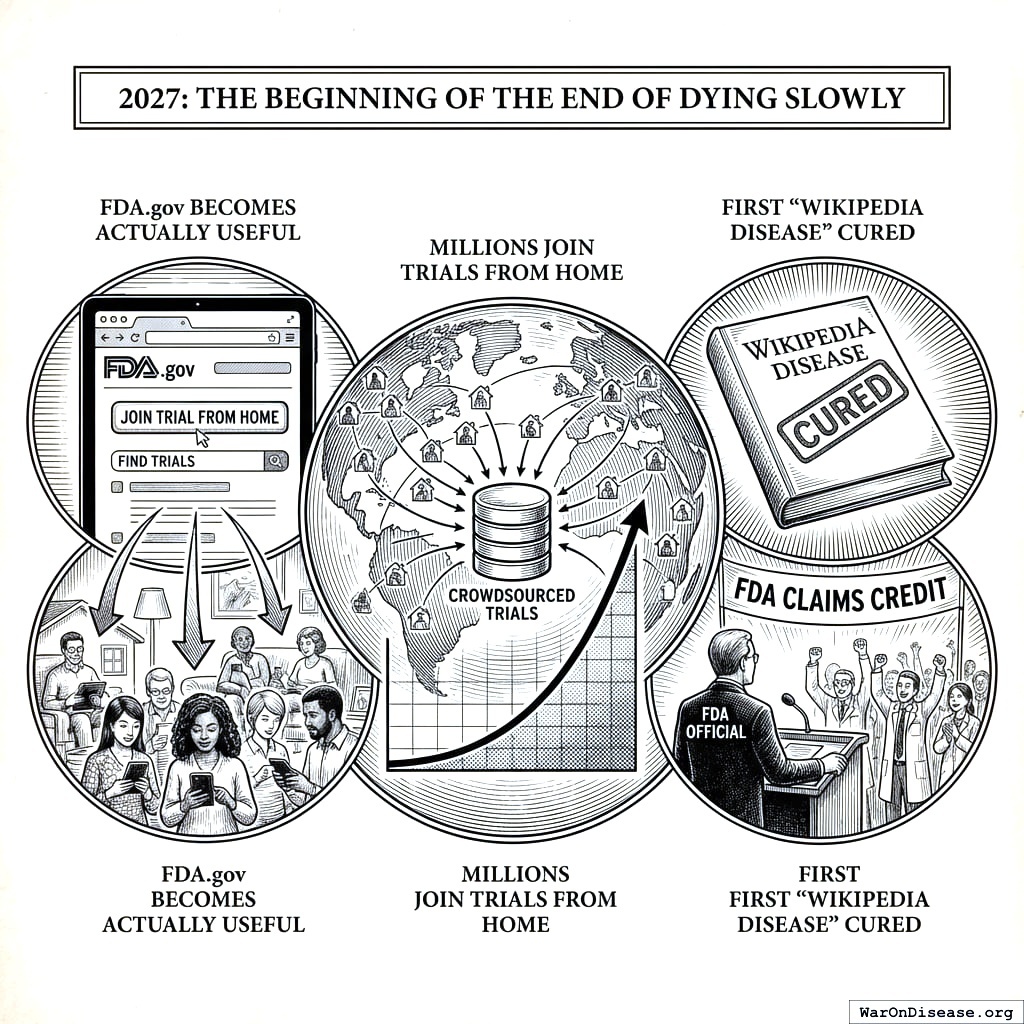](../../assets/images/dfda/dfda-section-2027-the-beginning-of-the-end-of-dying-slowly-bw-academic.jpg)
Medical research you can do in your pajamas. Take pill, report results, help science. Like jury duty but you might live longer.
### 2030: Big Pharma Pivots or Dies
Pharmaceutical companies realize they can’t charge \$10,000 for pills that cost \$1 to make when everyone can see the data. Some adapt. Some become museums (the gift shop sells expired painkillers at original markup).
### 2035: The Great Revelation
Humanity could have done this all along. The internet existed since 1990. Computers since 1950.
[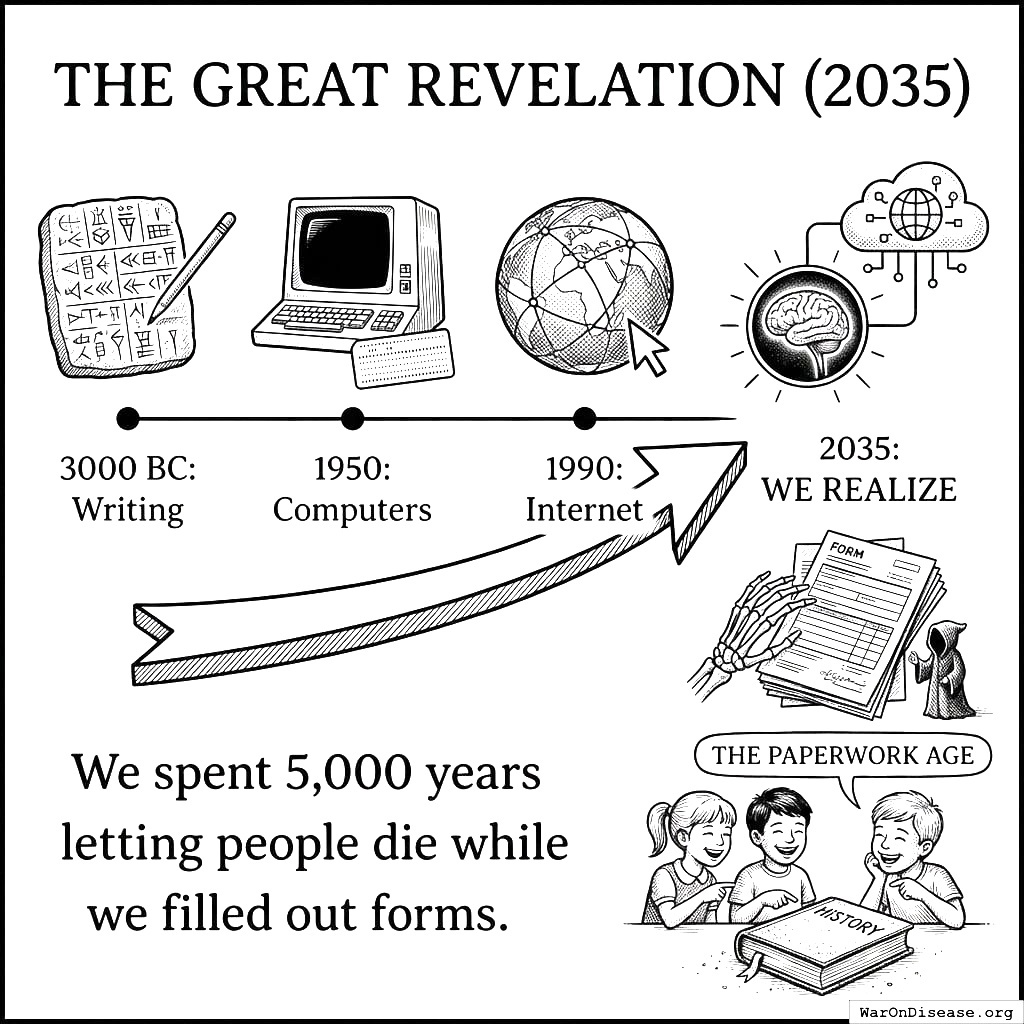](../../assets/images/dfda/dfda-section-2035-the-great-revelation-bw-academic.jpg)
Humans invented writing, then printing, then computers. Then used all three to make filling out forms take longer.
Five thousand years of letting people die while filling out forms. History books will call this “The Paperwork Age.” Children will laugh.
### 2050: Death Becomes Opt-In
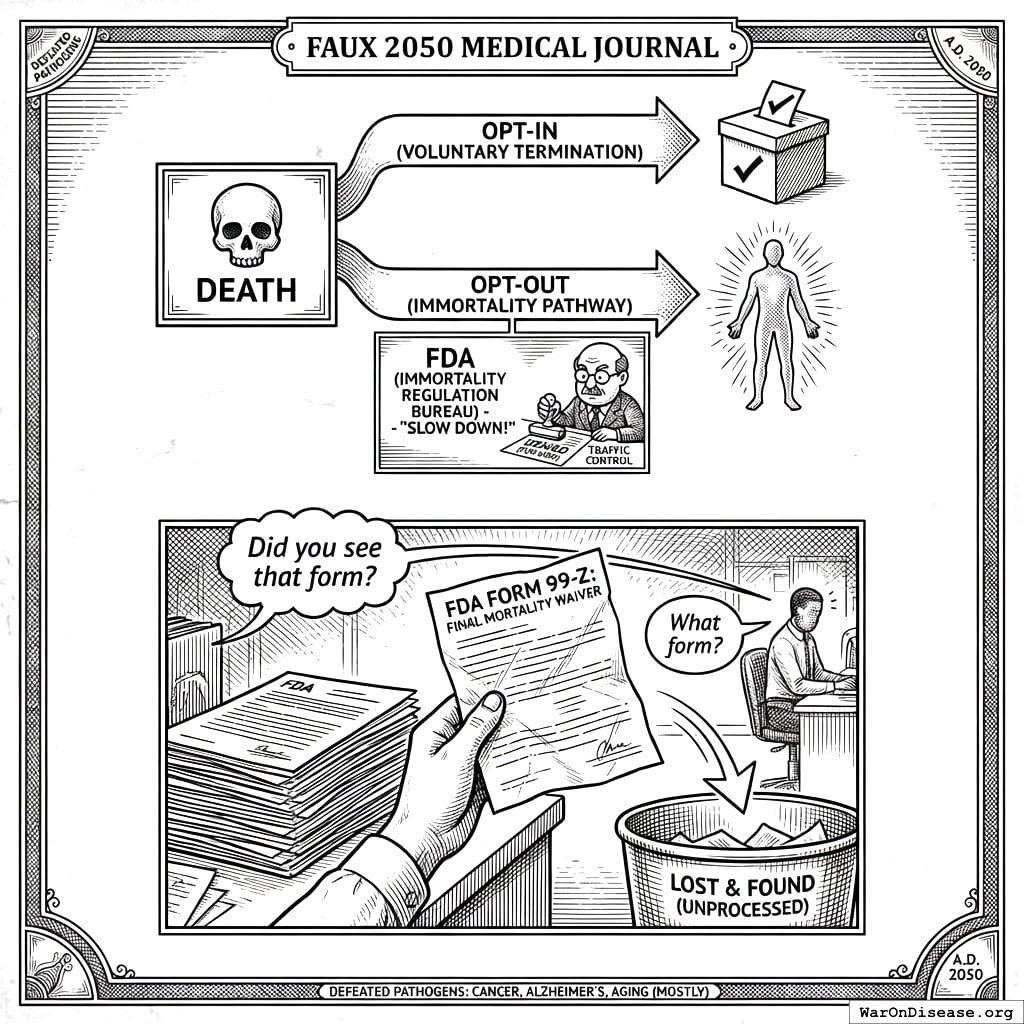
Diseases are mostly solved. Death becomes a choice, like smoking or voting for the Uniparty. The FDA’s job becomes preventing people from becoming immortal too quickly (traffic is bad enough).
[](../../assets/images/dfda/dfda-section-2050-death-becomes-opt-in-bw-academic.jpg)
Before the FDA: death was optional if you could afford medicine. After the FDA: death is mandatory unless you fill out the right paperwork.
The last FDA form is filled out. It’s immediately lost. Nobody notices.
### How Your Decentralized FDA Actually Works
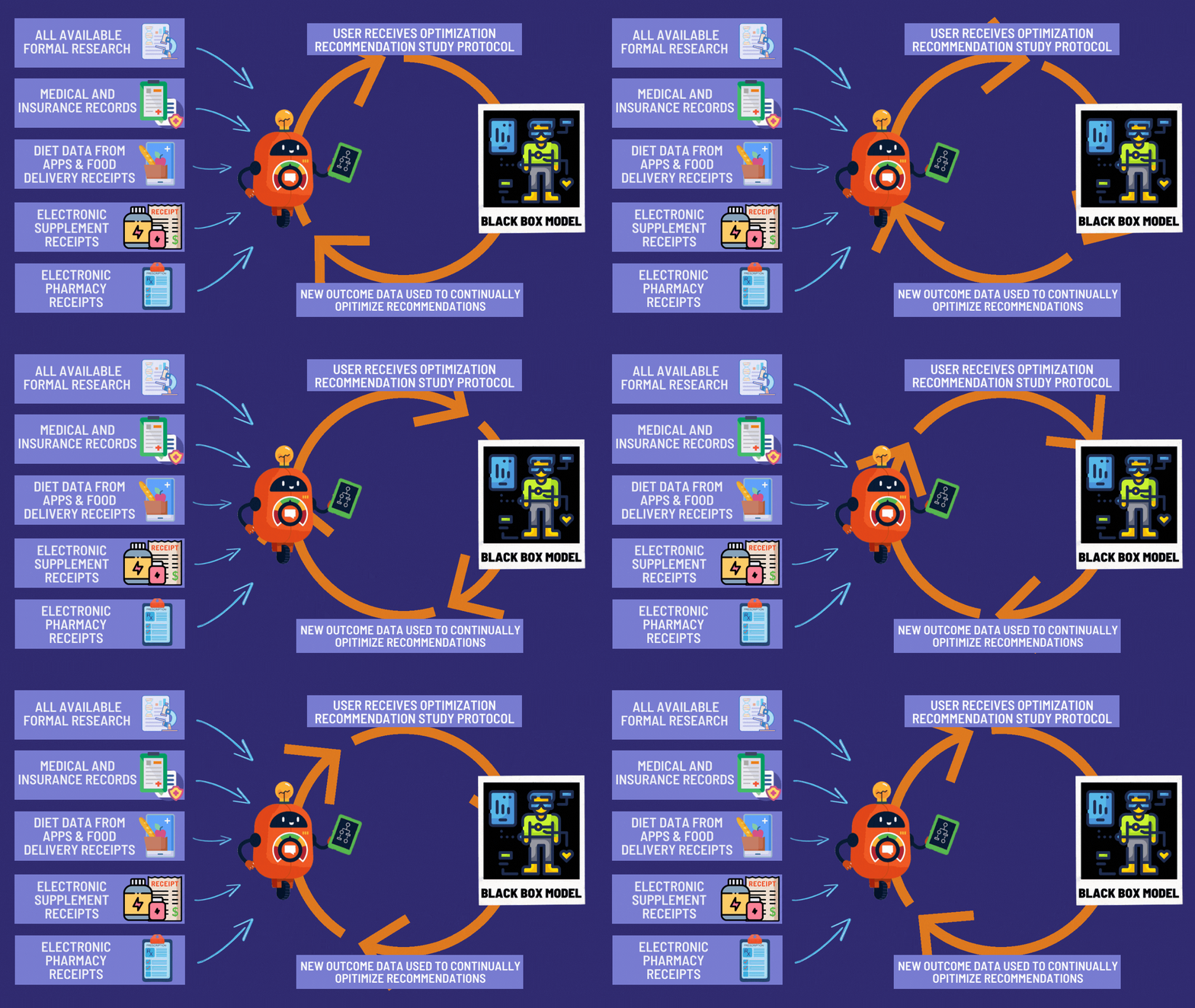
This approach is **[44.1x (90% CI: 12.8x-210x)](../../knowledge/appendix/parameters-and-calculations.llms.md#sec-dfda_trial_cost_reduction_factor) more cost-efficient** than the current system, driven by:
- **Cost per patient**: [\$929 (95% CI: \$97-\$3,000)](../../knowledge/appendix/parameters-and-calculations.llms.md#sec-dfda_pragmatic_trial_cost_per_patient) vs the current [\$41,000 (95% CI: \$20,000-\$120,000)](../../knowledge/appendix/parameters-and-calculations.llms.md#sec-traditional_phase3_cost_per_patient)
- **Time to results**: [3 months](../../knowledge/appendix/parameters-and-calculations.llms.md#sec-oxford_recovery_trial_duration_months) vs the current [10.5 years (95% CI: 6 years-12 years)](../../knowledge/appendix/parameters-and-calculations.llms.md#sec-fda_phase_1_to_approval_years)
- **Patient access**: Universal access vs [86.1%](../../knowledge/appendix/parameters-and-calculations.llms.md#sec-antidepressant_trial_exclusion_rate) excluded currently
| Metric | Current FDA System | A Decentralized Framework for Drug Assessment | Improvement |
|----|----|----|----|
| **Approach** | Central Planning | Open Platform | Market-based |
| **Cost per Patient** | [\$41,000 (95% CI: \$20,000-\$120,000)](../../knowledge/appendix/parameters-and-calculations.llms.md#sec-traditional_phase3_cost_per_patient) | [\$929 (95% CI: \$97-\$3,000)](../../knowledge/appendix/parameters-and-calculations.llms.md#sec-dfda_pragmatic_trial_cost_per_patient) | **[44.1x (90% CI: 12.8x-210x)](../../knowledge/appendix/parameters-and-calculations.llms.md#sec-dfda_trial_cost_reduction_factor) cheaper** |
| **Efficacy Testing Time** | [8.2 years (90% CI: 4.84 years-11.5 years)](../../knowledge/appendix/parameters-and-calculations.llms.md#sec-efficacy_lag_years) | [3 months](../../knowledge/appendix/parameters-and-calculations.llms.md#sec-oxford_recovery_trial_duration_months) | **[32.8x (90% CI: 19.4x-45.9x)](../../knowledge/appendix/parameters-and-calculations.llms.md#sec-fda_to_oxford_recovery_trial_time_multiplier) faster** |
| **Patient Access** | [0.0792% (90% CI: 0.0631%-0.0975%)](../../knowledge/appendix/parameters-and-calculations.llms.md#sec-current_patient_participation_rate) | 100% | **[12.3x (90% CI: 4.92x-50.8x)](../../knowledge/appendix/parameters-and-calculations.llms.md#sec-dfda_trial_capacity_multiplier) more access** |
| **Innovation Impact** | [70%](../../knowledge/appendix/parameters-and-calculations.llms.md#sec-post_1962_drug_approval_reduction_pct) approval drop after 1962 | Competition drives innovation | Reversed decline |
1\.
IQVIA Report. Global trial capacity. *IQVIA Report: Clinical Trial Subjects Number Drops Due to Decline in COVID-19 Enrollment*
*1.9M participants annually (2022, post-COVID normalization from 4M peak in 2021) Additional sources: https://gmdpacademy.org/news/iqvia-report-clinical-trial-subjects-number-drops-due-to-decline-in-covid-19-enrollment/*
.
2\.
Trials. Patient willingness to participate in clinical trials. *Trials: Patients’ Willingness Survey*
*Recent surveys: 49-51% willingness (2020-2022) - dramatic drop from 85% (2019) during COVID-19 pandemic Cancer patients when approached: 88% consented to trials (Royal Marsden Hospital) Study type variation: 44.8% willing for drug trial, 76.2% for diagnostic study Top motivation: "Learning more about my health/medical condition" (67.4%) Top barrier: "Worry about experiencing side effects" (52.6%) Additional sources: https://trialsjournal.biomedcentral.com/articles/10.1186/s13063-015-1105-3 \| https://www.appliedclinicaltrialsonline.com/view/industry-forced-to-rethink-patient-participation-in-trials \| https://pmc.ncbi.nlm.nih.gov/articles/PMC7183682/*
.
3\.
NIH. Antidepressant clinical trial exclusion rates. *Zimmerman et al.* (2015)
*Mean exclusion rate: 86.1% across 158 antidepressant efficacy trials (range: 44.4% to 99.8%) More than 82% of real-world depression patients would be ineligible for antidepressant registration trials Exclusion rates increased over time: 91.4% (2010-2014) vs. 83.8% (1995-2009) Most common exclusions: comorbid psychiatric disorders, age restrictions, insufficient depression severity, medical conditions Emergency psychiatry patients: only 3.3% eligible (96.7% excluded) when applying 9 common exclusion criteria Only a minority of depressed patients seen in clinical practice are likely to be eligible for most AETs Note: Generalizability of antidepressant trials has decreased over time, with increasingly stringent exclusion criteria eliminating patients who would actually use the drugs in clinical practice Additional sources: https://pubmed.ncbi.nlm.nih.gov/26276679/ \| https://pubmed.ncbi.nlm.nih.gov/26164052/ \| https://www.wolterskluwer.com/en/news/antidepressant-trials-exclude-most-real-world-patients-with-depression*
.
4\.
Sakaeda et al. FAERS adverse event underreporting rate. *PubMed: Empirical estimation of under-reporting in FAERS* (2017)
*Empirical estimation: Average reporting rate approximately 6%, meaning 94% of adverse events are underreported Variability: 0.01% to 44% for statin events; 0.002% to \>100% for biological drugs; 20% to \>100% for narrow therapeutic index (NTI) drugs Selective reporting: Serious, unusual events more likely reported than mild or expected ones Newly marketed drugs: Higher reporting rates due to heightened awareness Older drugs: Events often under-reported Note: FAERS voluntary reporting system captures only "tip of the iceberg" of drug safety problems. Under-reporting introduces inherent biases and limitations in pharmacovigilance data Additional sources: https://pubmed.ncbi.nlm.nih.gov/28447485/ \| https://pmc.ncbi.nlm.nih.gov/articles/PMC12393772/*
.
5\.
GAO. 95% of diseases have 0 FDA-approved treatments. *GAO* (2025)
*95% of diseases have no treatment Additional sources: https://www.gao.gov/products/gao-25-106774 \| https://globalgenes.org/rare-disease-facts/*
.
6\.
FDA. FDA trial patient exclusion criteria. *FDA: Evaluating Inclusion & Exclusion Criteria*
*Most frequent exclusions: Pregnancy, lactation/breastfeeding, renal/hepatic abnormalities, specific infectious diseases Pregnant/lactating women: \>90% of trials exclude Older adults: 27% exclude based on age (arbitrary upper limits) Patients with organ dysfunction: Excluded due to adverse impact concerns from comorbidities/concomitant meds Multiple chronic conditions: Often exclusion criterion despite being common in target population Children/adolescents: Excluded due to ethical considerations High-risk patients: Prior malignancy history, active brain metastases, suboptimal hepatic/renal function, HIV+ FDA guidance: Working to broaden eligibility; "exclusions based on age alone rarely appropriate Note: Exclusion criteria often eliminate patients who would actually use the drug, reducing real-world applicability of trial results Additional sources: https://www.fda.gov/media/134754/download \| https://www.sciencedirect.com/science/article/abs/pii/S1551714421002512 \| https://ascopubs.org/doi/10.1200/EDBK_155880*
.
7\.
Keitner, G. I., Posternak, M. A. & Ryan, C. E. How many subjects with major depressive disorder meet eligibility requirements of an antidepressant efficacy trial? *Journal of Clinical Psychiatry* (2003).
8\.
Institute of Medicine (US). US clinical trial enrollment targets (2009). *Institute of Medicine (US)*
*As of August 2009, 10,974 ongoing interventional clinical trials with at least one U.S. center were collectively seeking to enroll 2.8 million subjects. Additional sources: https://www.ncbi.nlm.nih.gov/books/NBK50886/*
.
9\.
Benson, K. & Hartz, A. J. A comparison of observational studies and randomized, controlled trials. *New England Journal of Medicine* (2000) doi:[10.1056/NEJM200006223422506](https://doi.org/10.1056/NEJM200006223422506).
10\.
Austin Bradford Hill. The environment and disease: Association or causation? *PubMed Central: Hill 1965* (1965)
*Original paper establishing the 9 criteria for evaluating causal relationships in epidemiology Criteria: Strength, Consistency, Specificity, Temporality, Biological Gradient, Plausibility, Coherence, Experiment, Analogy Published in Proceedings of the Royal Society of Medicine Most influential framework for assessing causation from observational data Additional sources: https://www.ncbi.nlm.nih.gov/pmc/articles/PMC1898525/ \| https://en.wikipedia.org/wiki/Bradford_Hill_criteria*
.
11\.
RECOVERY Trial. RECOVERY trial dexamethasone results. *RECOVERY Trial*
*Dexamethasone reduced deaths by one-third in ventilated patients (rate ratio 0.65 \[95% confidence interval 0.48 to 0.88\]; \$p=0.0003\$) and by one fifth in other patients receiving oxygen only (0.80 \[0.67 to 0.96\]; \$p=0.0021\$) Additional sources: https://www.recoverytrial.net/news/low-cost-dexamethasone-reduces-death-by-up-to-one-third-in-hospitalised-patients-with-severe-respiratory-complications-of-covid-19*
.
12\.
Oxford University News. RECOVERY trial summary quote. *Oxford University News*
*One trial. Over 47,000 participants. Nearly 200 hospital sites, across six countries. Ten results. Four effective COVID-19 treatments... Through discovering four treatments that effectively reduce deaths from COVID-19, it is certain that the study has saved thousands – if not millions – of lives worldwide. Additional sources: https://www.ox.ac.uk/news/features/recovery-trial-two-years*
.
13\.
University of Oxford. RECOVERY trial time to first cure. *University of Oxford* (2020)
*100 days to first cure Additional sources: https://www.ox.ac.uk/news/2020-06-16-dexamethasone-reduces-death-hospitalised-patients-severe-respiratory-complications \| https://www.recoverytrial.net/news/low-cost-dexamethasone-reduces-death-by-up-to-one-third-in-hospitalised-patients-with-severe-respiratory-complications-of-covid-19*
.
14\.
Ramsberg, J. & Platt, R. Opportunities and barriers for pragmatic embedded trials: Triumphs and tribulations. *Harvard Medical School/Harvard Pilgrim Health Care Institute* (2018)
*Meta-analysis of 108 embedded pragmatic clinical trials (2006-2016). The median cost per patient was \$97 (mean \$478) across all trials reviewed. 25% of studies cost less than \$19 per patient. US studies had higher median costs (\$187 vs \$27 non-US). Registry-based trials were less expensive than EHR-based trials. Traditional RCT comparison: \$16,600/patient (Berndt & Cockburn 2014). The 108 trials had median enrollment of 5,540 patients with broad eligibility criteria. 81% used cluster randomization. Trials spanned 15 countries, infectious diseases (25%), cardiovascular (18%), diabetes (12%). Additional sources: https://pmc.ncbi.nlm.nih.gov/articles/PMC6508852/*
.
15\.
NIH Common Fund. NIH pragmatic trials: Minimal funding despite 30x cost advantage. *NIH Common Fund: HCS Research Collaboratory* (2025)
*The NIH Pragmatic Trials Collaboratory funds trials at \$500K for planning phase, \$1M/year for implementation-a tiny fraction of NIH’s budget. The ADAPTABLE trial cost \$14 million for 15,076 patients (= \$929/patient) versus \$420 million for a similar traditional RCT (30x cheaper), yet pragmatic trials remain severely underfunded. PCORnet infrastructure enables real-world trials embedded in healthcare systems, but receives minimal support compared to basic research funding. Additional sources: https://commonfund.nih.gov/hcscollaboratory \| https://pcornet.org/wp-content/uploads/2025/08/ADAPTABLE_Lay_Summary_21JUL2025.pdf \| https://www.ncbi.nlm.nih.gov/pmc/articles/PMC5604499/*
.
16\.
Sinn, M. P. *The 1% Treaty*. (2025) doi:[10.5281/zenodo.20076511](https://doi.org/10.5281/zenodo.20076511)
*Your governments possess nuclear weapons sufficient to end civilization 122 times but have not cured Alzheimer’s once. This treaty asks them to be 1% more rational.*
17\.
Sinn, M. P. *The 1% Treaty: An Incentive-Compatible Approach to Ending War and Disease*. (2025) doi:[10.5281/zenodo.18161560](https://doi.org/10.5281/zenodo.18161560)
*6,650 diseases have zero FDA-approved treatments; at current trial capacity, exploring them takes 443 years. Redirecting 1% of military spending scales capacity 12.3x, cutting the timeline to 36 years and preventing 10.7 billion deaths. At \$0.02/DALY, 9.3kx more cost-effective than the best existing interventions. The result holds across every specified adoption pathway.*
18\.
Drugs.com. Time to develop one drug: 17 years. *Drugs.com*
*Time to develop one drug: 17 years Additional sources: https://www.drugs.com/fda-approval-process.html \| https://www.fdareview.org/issues/the-drug-development-and-approval-process/*
.
19\.
FDAReview.org. Estimated deaths due to FDA delay in approving beta blockers. *FDAReview.org: FDA Harm* (2011)
*Beta blockers approved in Europe mid-1970s, FDA didn’t approve until 1981 FDA estimated the drug could save 17,000 lives/year after approval Estimated 100,000 deaths from secondary heart attacks during 6-7 year delay Note: FDA imposed moratorium due to possible animal carcinogenicity despite human clinical evidence from 1974 Additional sources: https://www.fdareview.org/issues/theory-evidence-and-examples-of-fda-harm/ \| https://www.ocregister.com/2011/02/09/walter-williams-death-by-fda-delay-denials/*
.
20\.
JAMA Internal Medicine. Cost breakdown of traditional clinical trials. *JAMA Internal Medicine: Clinical Trial Costs Study*
*Median clinical trial cost: \$19.0 million (range: \$12.2M - \$33.1M) Cost per patient varies by phase: Phase 1: \$137K, Phase 2: \$130K, Phase 3: \$113K Note: Based on analysis of 138 clinical trials. Actual costs can vary significantly based on disease area, trial complexity, and patient population Additional sources: https://jamanetwork.com/journals/jamainternalmedicine/fullarticle/2702287*
.
21\.
Sinn, M. P. *Wishocracy: Solving the Democratic Principal-Agent Problem Through Pairwise Preference Aggregation*. (2025) doi:[10.5281/zenodo.18205881](https://doi.org/10.5281/zenodo.18205881)
*Representative democracy suffers from an inescapable principal-agent problem where elected officials’ incentives diverge from citizen welfare. Wishocracy introduces RAPPA (Randomized Aggregated Pairwise Preference Allocation), which aggregates citizen preferences through cognitively tractable pairwise comparisons and creates accountability via Citizen Alignment Scores that channel electoral resources toward politicians who actually represent what citizens want.*
22\.
MobiHealthNews, Aug. Other DCT platform company funding. *MobiHealthNews* (2020)
*Science 37: \$40M raised Thread: up to \$50M raised uMotif: \$25.5M raised These companies show that you can achieve significant traction and platform development with investments in the tens of millions. Additional sources: https://www.mobihealthnews.com/news/exo-raises-40m-handheld-ultrasound-decentralized-trial-platforms-raise-nearly-100m-and-more \| https://www.pharmasalmanac.com/articles/umotif-the-patient-first-data-capture-and-decentralized-clinical-trials-platform-announces-25.5m-of-new-investment-from-a-fund-managed-by-athyrium-capital-management*
.
23\.
Wikipedia. Number of key FDA drug reviewers. *Wikipedia: Center for Drug Evaluation and Research*
*CDER review teams: 1,300 employees evaluate and approve new drugs CDER safety team: 72 employees monitor 3,000+ prescription drugs for 200 million people (\$15M/year budget) FDA Advisory Committees (all 3 centers): 300 individuals serve on 40 committees Advisory committees stable in recent years Note: " 200" may refer to advisory committee members ( 300 actual) or be approximation. CDER has 1,300 review staff total. Safety monitoring: 72 people for 200M patients Additional sources: https://en.wikipedia.org/wiki/Center_for_Drug_Evaluation_and_Research \| https://www.ncbi.nlm.nih.gov/books/NBK236088/*
.
24\.
Biotechnology Innovation Organization (BIO). BIO clinical development success rates 2011-2020. *Biotechnology Innovation Organization (BIO)* (2021)
*Phase I duration: 2.3 years average Total time to market (Phase I-III + approval): 10.5 years average Phase transition success rates: Phase I→II: 63.2%, Phase II→III: 30.7%, Phase III→Approval: 58.1% Overall probability of approval from Phase I: 12% Note: Largest publicly available study of clinical trial success rates. Efficacy lag = 10.5 - 2.3 = 8.2 years post-safety verification. Additional sources: https://go.bio.org/rs/490-EHZ-999/images/ClinicalDevelopmentSuccessRates2011_2020.pdf*
.
25\.
ACS CAN. Clinical trial patient participation rate. *ACS CAN: Barriers to Clinical Trial Enrollment*
*Only 3-5% of adult cancer patients in US receive treatment within clinical trials About 5% of American adults have ever participated in any clinical trial Oncology: 2-3% of all oncology patients participate Contrast: 50-60% enrollment for pediatric cancer trials (\<15 years old) Note: 20% of cancer trials fail due to insufficient enrollment; 11% of research sites enroll zero patients Additional sources: https://www.fightcancer.org/policy-resources/barriers-patient-enrollment-therapeutic-clinical-trials-cancer \| https://hints.cancer.gov/docs/Briefs/HINTS_Brief_48.pdf*
.
26\.
ScienceDaily. Global prevalence of chronic disease. *ScienceDaily: GBD 2015 Study* (2015)
*2.3 billion individuals had more than five ailments (2013) Chronic conditions caused 74% of all deaths worldwide (2019), up from 67% (2010) Approximately 1 in 3 adults suffer from multiple chronic conditions (MCCs) Risk factor exposures: 2B exposed to biomass fuel, 1B to air pollution, 1B smokers Projected economic cost: \$47 trillion by 2030 Note: 2.3B with 5+ ailments is more accurate than "2B with chronic disease." One-third of all adults globally have multiple chronic conditions Additional sources: https://www.sciencedaily.com/releases/2015/06/150608081753.htm \| https://pmc.ncbi.nlm.nih.gov/articles/PMC10830426/ \| https://pmc.ncbi.nlm.nih.gov/articles/PMC6214883/*
.
27\.
UN. Global population reaches 8 billion. *UN: World Population 8 Billion Nov 15 2022* (2022)
*Milestone: November 15, 2022 (UN World Population Prospects 2022) Day of Eight Billion" designated by UN Added 1 billion people in just 11 years (2011-2022) Growth rate: Slowest since 1950; fell under 1% in 2020 Future: 15 years to reach 9B (2037); projected peak 10.4B in 2080s Projections: 8.5B (2030), 9.7B (2050), 10.4B (2080-2100 plateau) Note: Milestone reached Nov 2022. Population growth slowing; will take longer to add next billion (15 years vs 11 years) Additional sources: https://www.un.org/en/desa/world-population-reach-8-billion-15-november-2022 \| https://www.un.org/en/dayof8billion \| https://en.wikipedia.org/wiki/Day_of_Eight_Billion*
.
28\.
Kinch, M. S. & Griesenauer, R. H. [Lost medicines: A longer view of the pharmaceutical industry with the potential to reinvigorate discovery](https://doi.org/10.1016/j.drudis.2019.01.009). *Drug Discovery Today* **24**, 875–880 (2019)
*Research identified 1,600+ medicines available in 1962. The 1950s represented industry high-water mark with \>30 new products in five of ten years; this rate would not be replicated until late 1990s. More than half (880) of these medicines were lost following implementation of Kefauver-Harris Amendment. The peak of 1962 would not be seen again until early 21st century. By 2016 number of organizations actively involved in R&D at level not seen since 1914.*
29\.
Oren Cass, Manhattan Institute. RECOVERY trial cost per patient. *Oren Cass* (2023)
*The RECOVERY trial, for example, cost only about \$500 per patient... By contrast, the median per-patient cost of a pivotal trial for a new therapeutic is around \$41,000. Additional sources: https://manhattan.institute/article/slow-costly-clinical-trials-drag-down-biomedical-breakthroughs*
.
30\.
NHS England; Águas et al. RECOVERY trial global lives saved ( 1 million). *NHS England: 1 Million Lives Saved* (2021)
*Dexamethasone saved 1 million lives worldwide (NHS England estimate, March 2021, 9 months after discovery). UK alone: 22,000 lives saved. Methodology: Águas et al. Nature Communications 2021 estimated 650,000 lives (range: 240,000-1,400,000) for July-December 2020 alone, based on RECOVERY trial mortality reductions (36% for ventilated, 18% for oxygen-only patients) applied to global COVID hospitalizations. June 2020 announcement: Dexamethasone reduced deaths by up to 1/3 (ventilated patients), 1/5 (oxygen patients). Impact immediate: Adopted into standard care globally within hours of announcement. Additional sources: https://www.england.nhs.uk/2021/03/covid-treatment-developed-in-the-nhs-saves-a-million-lives/ \| https://www.nature.com/articles/s41467-021-21134-2 \| https://pharmaceutical-journal.com/article/news/steroid-has-saved-the-lives-of-one-million-covid-19-patients-worldwide-figures-show \| https://www.recoverytrial.net/news/recovery-trial-celebrates-two-year-anniversary-of-life-saving-dexamethasone-result*
.
31\.
Manhattan Institute. RECOVERY trial 82× cost reduction. *Manhattan Institute: Slow Costly Trials*
*RECOVERY trial: \$500 per patient (\$20M for 48,000 patients = \$417/patient) Typical clinical trial: \$41,000 median per-patient cost Cost reduction: 80-82× cheaper (\$41,000 ÷ \$500 ≈ 82×) Efficiency: \$50 per patient per answer (10 therapeutics tested, 4 effective) Dexamethasone estimated to save \>630,000 lives Additional sources: https://manhattan.institute/article/slow-costly-clinical-trials-drag-down-biomedical-breakthroughs \| https://pmc.ncbi.nlm.nih.gov/articles/PMC9293394/*
.
32\.
FDA Study via NCBI. Trial costs, FDA study. *FDA Study via NCBI*
*Overall, the 138 clinical trials had an estimated median (IQR) cost of \$19.0 million (\$12.2 million-\$33.1 million)... The clinical trials cost a median (IQR) of \$41,117 (\$31,802-\$82,362) per patient. Additional sources: https://www.ncbi.nlm.nih.gov/pmc/articles/PMC6248200/*
.